

Chinese cuisine is among the world's most diverse and celebrated culinary traditions, spanning thousands of years and dozens of regional styles. However, to many home cooks, recreating that restaurant-quality flavor at home can feel elusive. The secret? It's rarely about a single exotic ingredient; it's about technique.
Whether you're inspired by the bold, numbing heat of Sichuan cuisine, as served up in Melbourne's award-winning plant-based modern Sichuan restaurant, SHU Restaurant, or you just want to get better at cooking a weeknight meal, then learn these 8 essential Chinese cooking techniques, and what comes out of your kitchen will change forever. Many of these techniques meshed perfectly with plant-based and vegan cuisine, so there's no need to settle for bland taste when you can have incredible flavor.
8 Chinese Cooking Techniques You Should Try At Home
1. Stir-Frying (Chǎo 炒)
Stir-frying is one of the most popular Chinese cooking styles, which is quick, hot, and exciting. Ingredients are thrown into a wok quickly over high heat and a little oil. The secret lies in wok hei, the smoky, caramelized flavor that comes from the wok that adds character to wok dishes.
How to do it at home: Heat your wok until it begins to smoke lightly. Once you've added the oil, add your aromatics (garlic, ginger, and dried chilies), then add your vegetables. Move things around on a regular basis. This should only take 3 to 5 minutes. Never overcrowd the wok, or you'll steam instead of fry.
Try it on: Serve with black bean sauce, garlic morning glory, or Sichuan dry-fried green beans.
2. Steaming (Zhēng 蒸)
Steaming is one of the healthiest and most elegant techniques in the Chinese kitchen. No oil required, just heat, water, and time. This produces tender, juicy, and naturally flavored food without losing the nutrients that would be sacrificed with boiling.
How to do it at home: Place ingredients in a bamboo steamer set over a wok of simmering water, ensuring the base of the steamer does not touch the water. Cover and steam until slightly cooked. Finish with a little soy and sesame oil.
Try it on: Silken tofu dishes with ginger and spring onions, sticky rice dumplings, or fragrant custard cups without eggs.
3. Braising: Red Braising (Hóng Shāo 红烧)
Chinese cuisine is centered around the concept of comforting cooking, which is commonly known as red braising. Slowly cook in a rich sauce with soy sauce, shaoxing wine, sugar, and aromatics until very tender and flavorful. The sauce reduces to a glossy, lacquered coat.
How to do it at home: Sear the central item in the dish first to achieve color. Cook with dark and light soy sauce, sugar, star anise, cinnamon, and water or stock, just enough to cover halfway. Cook on low heat for 30-45 minutes, occasionally turning.
Try it on: It can be served with braised tofu knots, red-braised tempeh, or braised lotus root with star anise.
4. Velveting (Huá 滑)
Ever found yourself wondering why the restaurant’s tofu and vegetables seem so soft and tender, yet your own tofu and vegetables are rubbery or floppy? The answer is “velveting,” a Chinese pre-cooking method that involves soaking ingredients in a cornstarch/soy sauce or rice wine and, if needed, a bit of bicarb and then briefly blanching them in hot water or oil before tossing them in a dish.
How to do it at home: Toss your tofu or pre-cut vegetables in cornstarch and a pinch of bicarb. Blanch for 60-90 seconds in hot (not boiling) water, drain, and reserve until ready for stir-fry or sauce.
Try it on: Silken tofu in mapo sauce or mushroom stir-fries.
5. Deep-Frying (Zhá 炸)
The secret of deep frying in Chinese cooking is not the frying fat but the texture and transformation. One dip in hot oil gives a shatteringly crisp outside, which retains sauces well without getting soggy.
How to do it at home: Place the oil in a hot pan and heat to about 175-180°C. Always measure the temperature with a thermometer. Cook in small quantities to help keep the food hot. Drain on a wire rack instead of a paper towel to preserve crispness.
Try it on: Deep-fried taro balls, fried tofu puffs, or deep-fried eggplant in a spicy Sichuan-style sauce.
6. Smoking (Xūn 熏)
Another lesser-known gem, Chinese smoking is a blend of tea leaves, rice, and brown sugar, used to produce aromatic smoke in a wok lined with foil. It adds a strong smoky flavor that complements any dish, and it's not a grill that needs to be taken outside.
How to do it at home: Line a wok with two layers of foil. Sprinkle a combination of half dry rice, half loose-leaf tea, and half brown sugar. Place a wire rack on top, add ingredients, cover, and cook 8-12 minutes over medium heat.
Try it on: Use for dipping noodles, smoked tofu, tea-smoked mushrooms, or smoked spring onion oil.
7. Blanching (Chāo 焯)
This simple method often goes unnoticed, but it is a basic way of cooking in Chinese cuisine. They are dipped only briefly into the boiling, hot, salty water, sometimes with a little oil to set the colour, to take off the bitterness, and to prepare them for their final sauce or stir-fry.
How to do it at home: Bring a large pot of water to a boil. Squeeze in a teaspoon of oil and salt. Throw in the veggies and cook for 60-90 seconds until they are super bright. Immediately put in iced water to stop cooking.
Try it on: Cook and serve with garlic sauce over gai lan (Chinese broccoli), sesame oil over spinach, or chilli oil over blanched enoki mushrooms.
8. Pan-Frying (Jiān 煎)
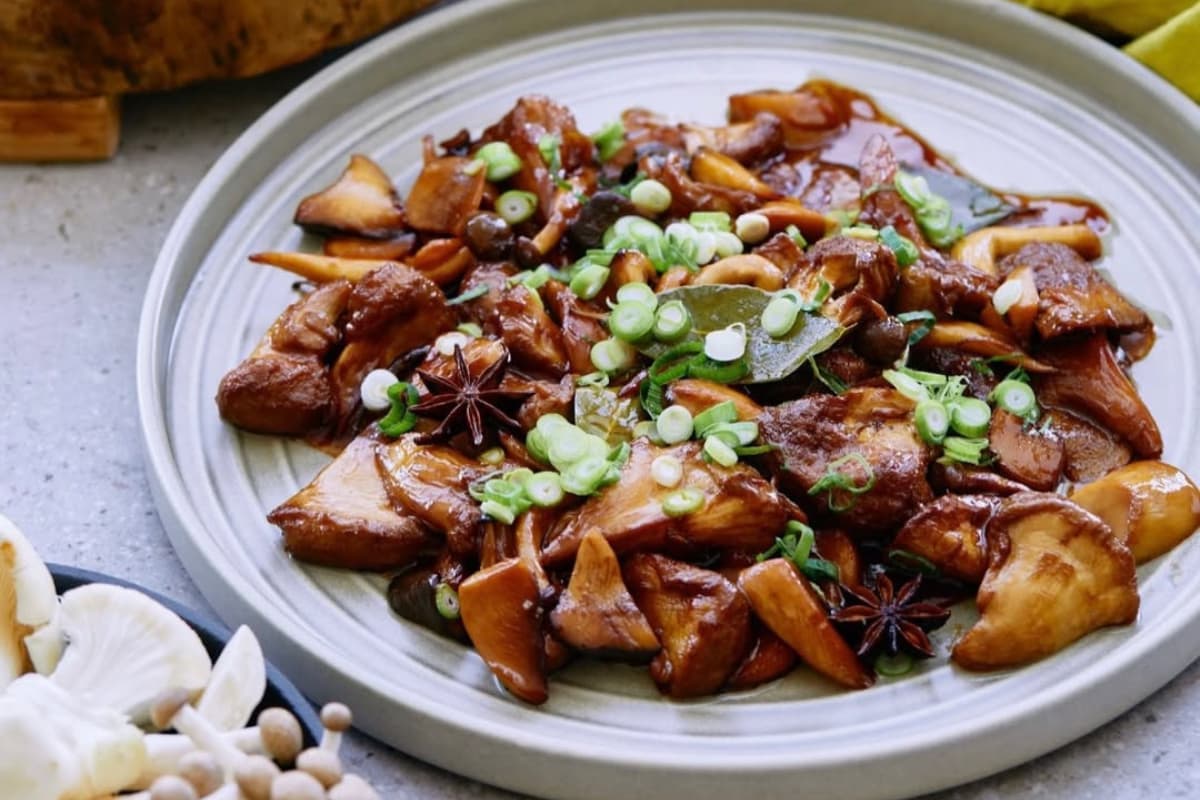
Pan-frying is between stir-frying and deep-frying, and requires more oil than a sauté but less than a deep-fry. The end result is crispy, perfectly golden, on the outside, and cooked on the inside. This is a really interesting method for tofu and dumplings.
How to do it at home: Heat a flat-bottom wok or pan on medium-high heat with a good amount of oil. Do not stir until a golden brown crust has formed (about 3-4 minutes), then turn over once and stir until the crust is golden brown.
Try it on: Potstickers (guotie), golden tofu steaks, or pan-fried tofu scallion pancakes.
Conclusion
The magic of Chinese cooking lies in how these techniques layer and interact. The velveting, stir-frying, and final braising of a single dish may be all that is required. Once you understand the thinking behind each process, you can make an informed guess as to which to go for.
To see these techniques at their finest in a plant-based kitchen, explore the modern Chinese dishes served at one of the leading vegan restaurants Melbourne diners visit for creative takes on traditional Sichuan cooking methods, such as red braising, smoking, and wok work.
Apply 1 technique for 1 week. Start with two cooking methods that are easy to use: stir-frying or steaming, and practice until it becomes a natural habit. The rest will follow. Great Chinese cooking at home is not about perfection; it's about learning the basic principles that have sustained billions of people for thousands of years.
Author: Jose Chavez - Blog Growth Expert at Ready To Rank
There aren't any comments left behind yet you can be the very first to comment!