
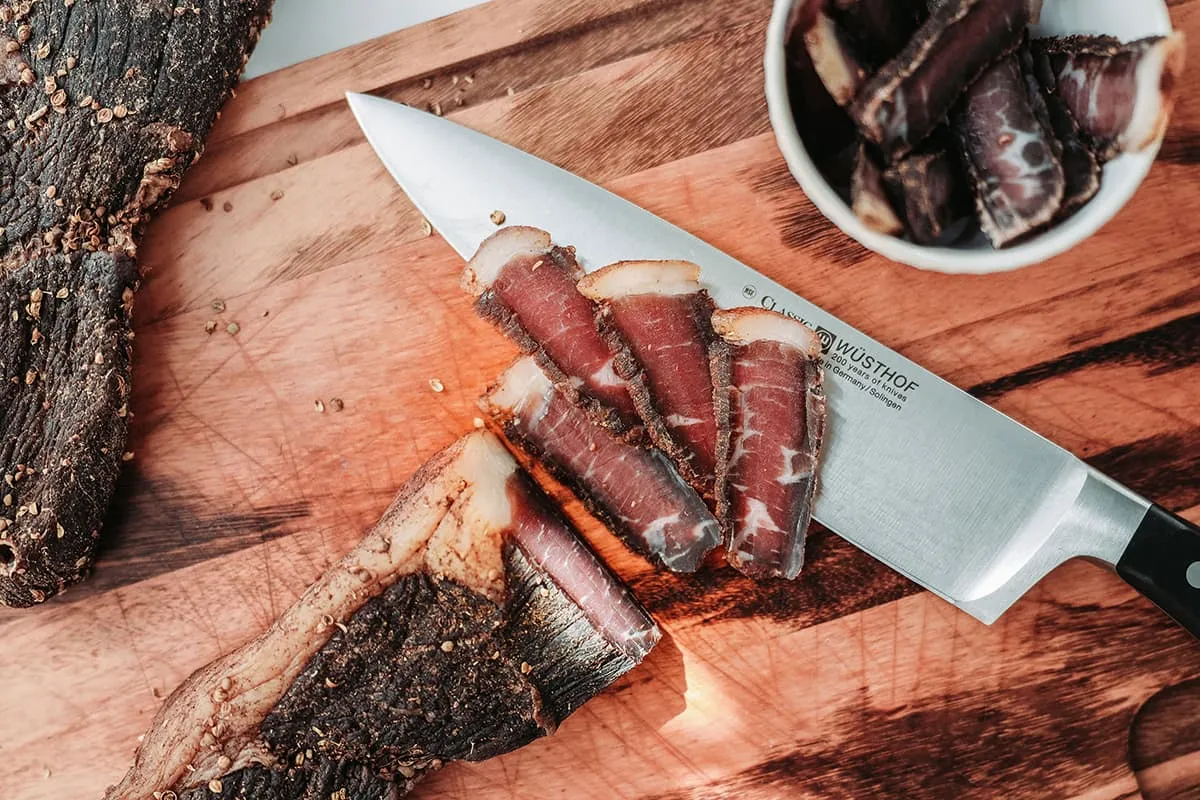

Protein snacks are having a moment. Walk down any supermarket aisle and you will find protein bars, protein balls and protein everything. But one of the best high-protein snacks around is also one of the oldest, and plenty of people outside South Africa have never tried it. It is called biltong: lean beef, cured with vinegar and spice, then air-dried until it is dense, savoury and deeply moreish.
If you have come across it before, you may have seen it described online as "South African beef jerky." That is a fair starting point, but biltong is really its own thing, and the differences are exactly what make it such a smart snack for anyone watching their carbs or chasing more protein. Here is what makes it worth a place in your kitchen.
What is biltong?
Biltong is air-dried, spiced beef from South Africa, where it has been made for generations. Strips of good beef are cured in a mix of salt, vinegar and spices, with coriander as the classic, then hung to dry in cool, moving air for anywhere from 7 to 12 days. Over that time the meat loses more than half of its moisture. What is left is a firm, flavour-packed slice of beef that you can eat straight from the bag.
That is the whole story. No baking, no smoking, no sugary glaze. Just beef, salt, vinegar and spice, plus time. Makers who still do it the traditional way, like Bokkie's Biltong in Barrie Ontario, follow exactly this process, with no shortcuts.
How biltong becomes a protein powerhouse
Here is the clever part. Because air-drying removes most of the water from the meat, everything left behind becomes more concentrated, and that includes the protein. Gram for gram, you are eating far more beef than the size of the piece suggests, because the water weight is gone.
That is why biltong is one of the most protein-dense snacks you can carry around. A small handful goes a long way, which makes it genuinely filling rather than just something to nibble on.
The macros: high in protein, low in carbs, lean and low in fat
Exact numbers vary by maker and by how lean the cut is, but a typical traditional beef biltong, per 100g, lands somewhere around:
- Protein: roughly 50g. This is the headline. Because drying removes the water, biltong ends up one of the most protein-dense foods you can buy, ahead of cooked chicken breast or canned tuna gram for gram.
- Carbohydrates: about 1 to 3g. Cured with vinegar and spice rather than sugar, so it is naturally very low in carbs and an easy fit for low-carb and keto eating.
- Fat: around 5 to 8g for a lean cut. That keeps lean biltong in the low to moderate range. Fattier cuts run higher, so how much fat is on your plate is largely your choice.
Calories: roughly 250 to 280. A 30g handful is only about 80 calories, which is why it keeps turning up in gym bags and lunchboxes.
On top of that it is gluten free and, when made properly, free from added sugar and preservatives.
A couple of honest notes. Not all biltong is equal: fattier cuts carry more fat, and cheaper versions sometimes add sugar to the cure, so check the label if your macros matter. Biltong is also fairly high in salt, since drying and curing concentrate the sodium, so it is a snack to enjoy in sensible portions rather than by the bagful.
Biltong vs jerky: why the difference matters for your macros
People often lump biltong and jerky together, but they are made very differently, and that shows up on the nutrition label.
Jerky is usually sliced thin and cooked quickly, baked or smoked in a matter of hours, and it is often marinated in sweet sauces like teriyaki or honey. Those sugary cures can push the carb and sugar content up.
Biltong is air-dried slowly over many days using salt, vinegar and spice, with no sugar needed for flavour. Because it is dried gently rather than cooked at high heat, it also holds on to more of the natural iron and minerals in the beef. The result is a snack that is typically higher in protein and lower in sugar than a lot of the jerky on the shelf.
Is biltong healthy?
For most people, yes, in sensible portions. It is high in protein, low in carbohydrates and, in its lean form, low in fat, with no gluten and, when made traditionally, no added sugar or preservatives. The one thing to watch is salt, since curing concentrates the sodium, so treat it as a high-protein snack rather than something to graze on by the handful all day.
How to actually eat it
Biltong is a proper ready-to-eat snack, which is half its appeal. A few favourite ways to enjoy it:
- Post-workout, when you want protein without cooking anything.
- In kids' lunchboxes, as a savoury alternative to crisps.
- As padkos, the South African word for road-trip food, it keeps well and travels brilliantly.
- On a cheese or charcuterie board, where it holds its own next to a sharp cheddar.
- Chopped into your cooking, scattered over a salad, baked into savoury muffins or stirred through scrambled eggs.
Once you have a bag in the cupboard, you will keep finding reasons to reach for it.
Recipe: high-protein biltong trail mix
If you want to put biltong to work as a snack, this is the easiest way to do it. No cooking, about five minutes, and you end up with a protein-packed mix that keeps for a couple of weeks in a sealed jar.
Makes about 4 servings.
Ingredients:
- 100g biltong, sliced or torn into bite-sized pieces
- 60g almonds
- 60g cashews
- 40g pumpkin seeds
- 30g sunflower seeds
- 30g dark chocolate chips or cacao nibs
Method:
- Tip the almonds, cashews, pumpkin seeds and sunflower seeds into a bowl and mix.
- Add the biltong and the dark chocolate, and toss everything together.
- Store in an airtight jar and reach for a handful whenever you want a savoury, high-protein hit.
- Swap the nuts and seeds for whatever you like. The biltong does the heavy lifting on protein either way.
Where to find proper biltong
The catch with biltong is that the good stuff is made slowly and simply, and that is hard to fake. If you are in Canada and want to try it done the traditional way, Bokkie's Biltong air-dries theirs using locally raised Ontario beef, with no nitrates and no preservatives, and ships across the country. It is a good place to taste what biltong is supposed to be before you work out how you like it: lean or fatty, dry or moist.
Give it one proper try and you will understand why South Africans get so misty-eyed about it.
There aren't any comments left behind yet you can be the very first to comment!