
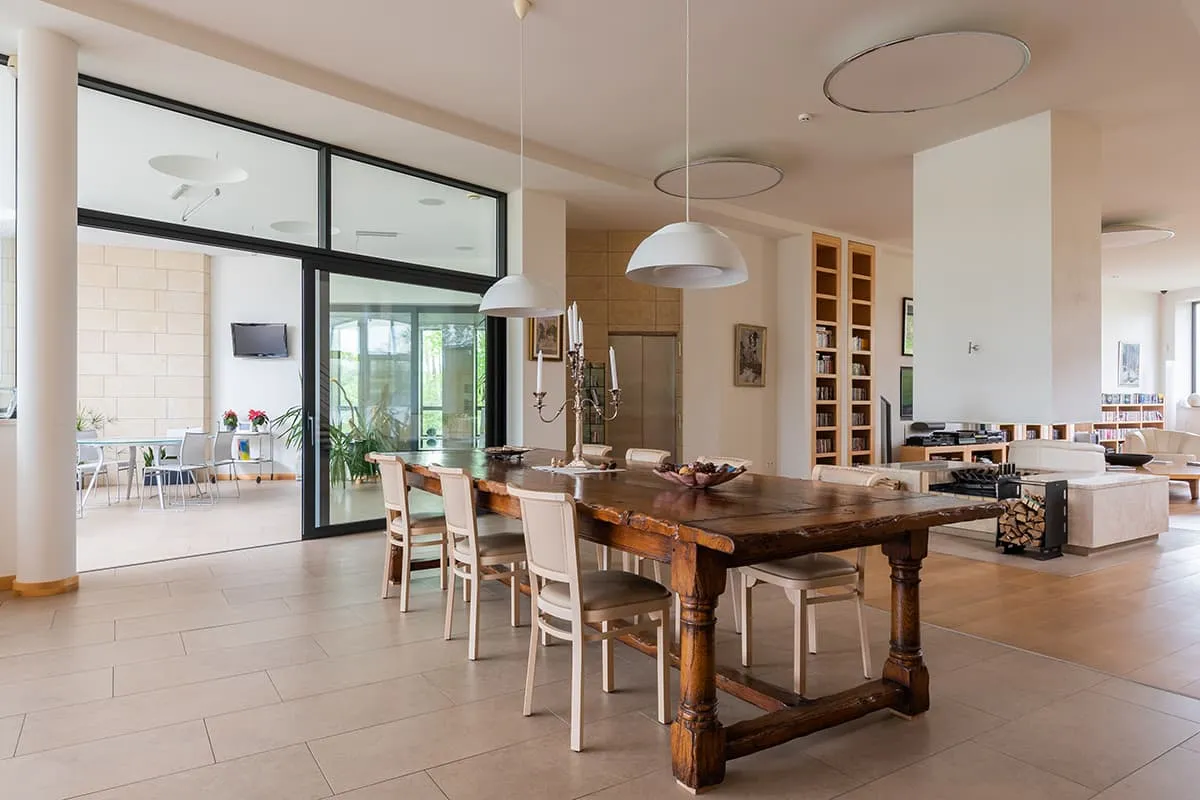

When professional chefs choreograph a dinner service, every movement matters. The flow from kitchen to guest is precisely orchestrated—and it's not by accident. Restaurant design engineers this seamless transition at the "pass," where plated dishes move from creation to consumption. The secret? These same principles can transform your home dining experience into something that feels as polished and intentional as fine dining.
The Commercial Design Principles
The Sightline Strategy Fine dining restaurants carefully control what guests see. Diners shouldn't glimpse a cluttered kitchen—instead, there's anticipation before each course arrives. Create definition between spaces using open doorways, partial walls, or decorative dividers. Position your dining table so the approach from the kitchen is from one direction, creating a "service flow."
The Traffic Pattern Blueprint Professional kitchens obsess over traffic flow. Designate a clear, direct pathway from kitchen to dining room. If space allows, plan one route for food service and another for clearing dishes. Even a 2-foot buffer zone shifts the feeling from utilitarian to intentional.
Zone Separation Through Design Restaurants use markers to distinguish spaces: flooring transitions, lighting changes, color treatments. If you don't have a natural wall, create visual boundaries through:
- Flooring: Tile in the pass, hardwood in the dining room
- Lighting: Brighter task lighting in the approach; warm ambient lighting at the table
- Color: A contrasting accent wall near the pass
- Architecture: Decorative screens, frosted glass panels, or sliding doors create soft separation while maintaining elegance
For inspiration on professional partitions and dividers, sites like onepointpartitions.com showcase how commercial-grade elements can be adapted for sophisticated home design.
Material Confidence Commercial kitchens invest in intentional surfaces. Choose dining finishes that signal care: quality hardwood flooring, solid-color paint, statement lighting. If your kitchen is visible, upgrade the counter edge (marble, granite, or wood) and keep it pristinely organized.
Why This Works
The journey to the table shapes the eating experience. When guests walk through a clearly defined, professionally designed space, they mentally prepare. Their attention shifts from the everyday to the intentional. They expect something special—and when the food arrives, they're primed to appreciate it.
This isn't snobbery. It's respect for the moment.
Practical Application
Quick wins (no renovation needed):
- Rearrange furniture to open the approach
- Add a single decorative element near the pass
- Upgrade overhead lighting
- Keep countertops clear and organized
- Position the dining table to optimize the service approach
Small renovation: Install a 4-foot partial wall or sliding screen creating visual boundary. Add task lighting above the kitchen side; a statement pendant above the dining table. Upgrade the counter edge to a substantial material. Replace kitchen flooring with durable tile while keeping dining room wood.
Result: The kitchen isn't hidden—it's framed. The dining experience feels separate and special, yet still connected to the kitchen's energy.
The Final Plate
The next time you're hosting dinner, notice the journey your guests take from kitchen to table. What do they see? Is there a moment of transition—a sense of moving into a space set apart?
That threshold is where professional kitchens work their magic. It's where anticipation builds and intention matters.
And it's absolutely something you can design into your home.






There aren't any comments left behind yet you can be the very first to comment!