
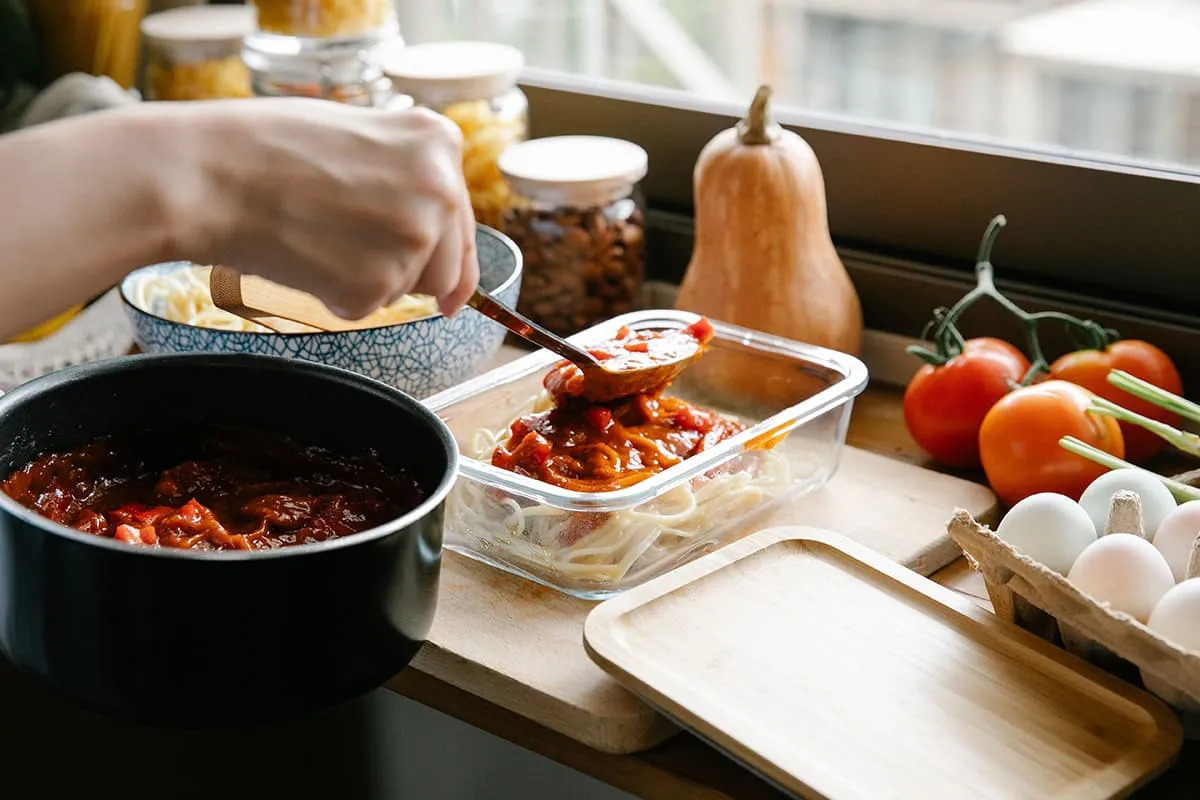

It’s Sunday evening. The chilli is done, and the big pot stays on the stove “to cool down” while you wash up and forget about it until bedtime. Knowing how to cool leftovers quickly and safely is the meal prep step most people skip.
Professional kitchens follow one simple rule, and you can use it at home with a sink, some ice and a few shallow containers.
Key Takeaways
- Follow the two-stage rule: cool food from 60°C to 21°C (140°F to 70°F) within 2 hours, then to 5°C (41°F) within the next 4 hours.
- Shallow containers and an ice bath do most of the work.
- Warm food can go in the fridge once the steam settles. Leaving it on the bench for hours is the real risk.
- A cheap probe thermometer takes the guesswork out of cooling.
Why Is Cooling the Meal Prep Step Most People Get Wrong?
Most people get cooling wrong because big batches hold heat far longer than they expect. Between 5°C and 60°C (41°F and 140°F), known as the temperature danger zone, bacteria can multiply quickly, and some produce toxins that reheating won’t destroy.
A full pot of soup or stock can stay warm in the centre for hours, even in the fridge.
Then there’s the old advice never to put hot food in the fridge. It dates back to ice boxes. Modern fridges cope fine with warm food in sensible portions; the giant pot is the problem, not refrigerating early.
The usual suspects are rice, stocks, stews, curries and cooked meats. Rice can carry spores of a bacterium called Bacillus cereus that survive cooking and become active as the rice slowly cools.
What Is the Two-Stage Cooling Rule Professional Kitchens Use?
The two-stage rule says cooked food should cool from 60°C to 21°C (140°F to 70°F) within two hours, then from 21°C to 5°C (70°F to 41°F) within the next four hours. That’s six hours in total, with the first two doing the heavy lifting.
In Australia, food businesses must follow this two-stage cooling rule, set by Food Standards Australia New Zealand. The US FDA Food Code uses almost identical numbers, so it’s a sound guide wherever you cook.
Bacteria grow fastest between roughly 21°C and 50°C, so the first stage matters most. Below 21°C, food can finish cooling in the fridge.
How to Cool Leftovers Quickly: 6 Methods That Work at Home
You don’t need special equipment to hit those targets.
1. Divide Into Shallow Containers
Depth is the enemy. Food no deeper than about 5 cm (2 in) cools many times faster than the same amount in a tall pot. Portion straight into meal prep containers and your lunches are packed too.
2. Use an Ice Bath
Fill the sink with cold water and plenty of ice, sit the pot in it and stir every 10 minutes. For soups, stocks and sauces, it’s the fastest home method.
3. Stir, and Add Ice Where You Can
Stirring moves heat from the centre to the edges. Chefs use a sealed “ice wand” filled with frozen water; a clean frozen water bottle works too. When making stock, hold back some of the water and add it at the end as ice.
4. Cut and Spread
Slice roasts into smaller pieces rather than refrigerating them whole. Spread rice, grains and roasted vegetables in a thin layer on a tray so steam escapes.
5. Give Containers Some Airflow
Don’t stack warm containers. Leave space so cold air can circulate, and rest lids on loosely until the food is chilled.
6. Check, Don’t Guess
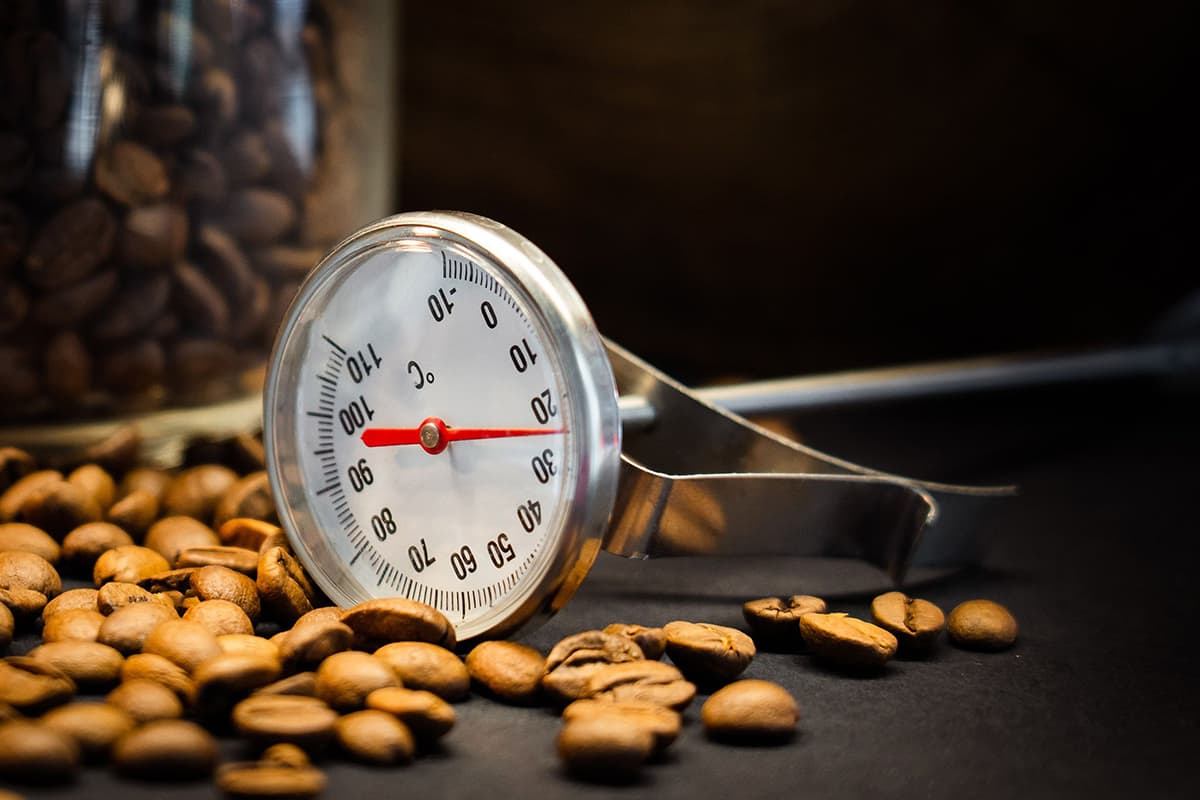
A digital food thermometer costs less than a takeaway dinner. Probe the centre of the thickest portion. If it reads below 21°C (70°F) within two hours, you’re on track.
[Image suggestion: stockpot sitting in an ice bath in the sink, next to soup portioned into shallow containers]
[Optional download: printable “Meal Prep Cooling Cheat Sheet” with the two-stage times and temperatures]
How Do Professional Kitchens Cool Food So Fast?
A busy restaurant might make 30 litres of stock before lunch, so an ice bath in the sink won't cut it. Many cafés and caterers use blast chillers, fridge-like units that blow very cold, fast-moving air over food and typically take a full tray through both cooling stages in around 90 minutes. Once it's chilled, the food goes into commercial fridges built to hold a steady 5°C (41°F) or below, even when they're packed and opened all through service.
They also use wide, shallow stainless steel trays called gastronorm pans, ice wands for big pots and cooling logs so nothing slips through.
At home, your fridge does that final job, but it can't cool a big pot quickly on its own. Pop a shallow tray in the freezer for 20 to 30 minutes, then move it to the fridge.
Common Cooling Mistakes to Avoid
- Leaving the pot on the stove overnight.
- Putting a whole hot stockpot in the fridge. It warms everything around it.
- Overpacking the fridge.
- Sealing containers while food is steaming. Trapped heat slows cooling.
- Reheating and re-cooling the same batch. Reheat only what you’ll eat, once.
Final Thoughts
Cooling takes about 15 minutes of effort, and it protects hours of meal prep. Remember the two-stage rule, reach for shallow containers and an ice bath, and get food into the fridge once the steam settles. Your Tuesday lunch will taste just as good as it did on Sunday, and it will be safe to eat.
FAQs
Can you put hot food straight in the fridge?
Yes, once the steam has settled and the food is in shallow portions. Modern fridges handle warm food well. Just avoid putting in a large, piping-hot pot, which cools too slowly and warms everything around it.
How long can cooked food sit out before refrigerating?
Aim to have cooked food below 21°C (70°F) within two hours of cooking. In practice, get it into shallow containers or an ice bath within the first hour rather than leaving it on the bench.
What’s the fastest way to cool a big pot of soup?
Sit the pot in a sink of iced water, stir every 10 minutes and add a frozen water bottle as an ice wand. Once the steam settles, divide it into shallow containers and refrigerate.
Is it safe to cool rice at room temperature?
Not for long. Cooked rice can carry spores that become active as it cools slowly. Spread it thinly on a tray, refrigerate it within an hour or so and eat it within a day or two, reheating it until steaming hot.

There aren't any comments left behind yet you can be the very first to comment!