
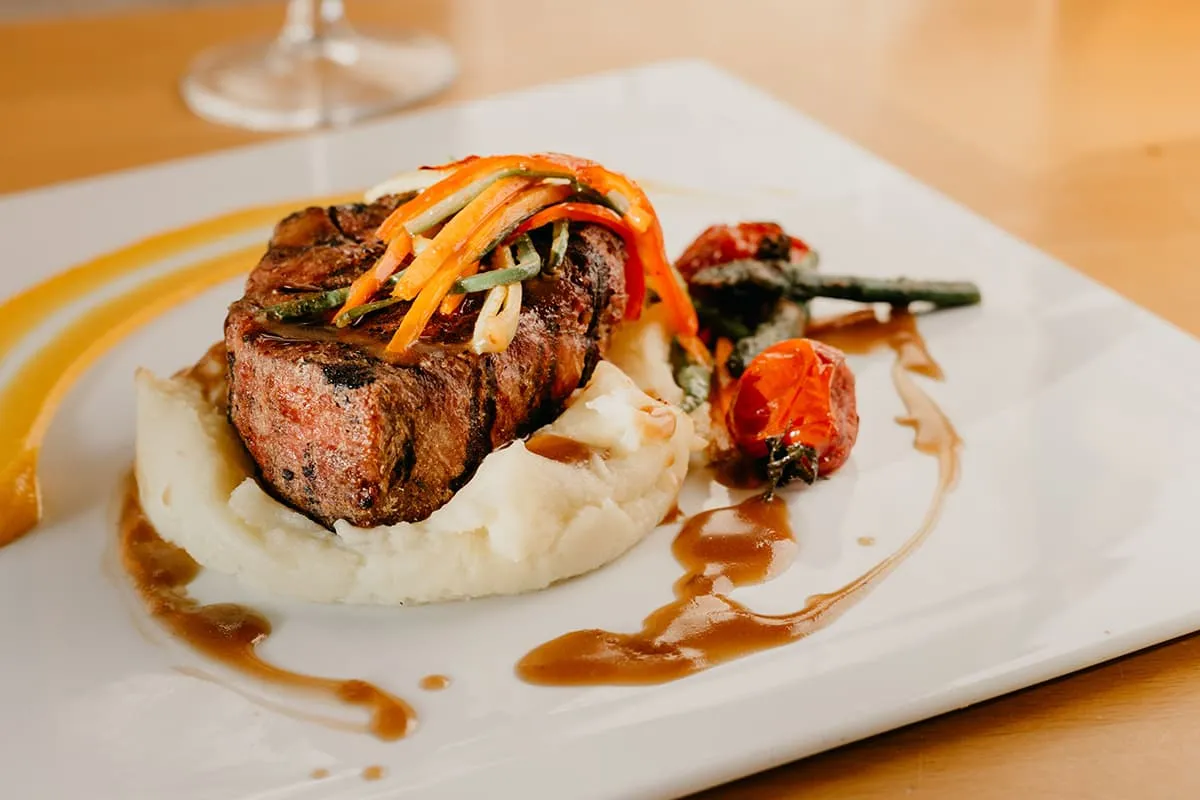

Twelve cuts. Four grades. Three thicknesses. One hungry person staring at a menu that reads like a parts catalog for a cow.
Ask anyone who has worked a butcher counter and they’ll tell you the same thing: plenty of customers know exactly how they want their steak cooked but have no idea what they’re actually ordering. Strip, sirloin, filet, ribeye. The words blur together after a while. So let's fix that.
Here's the short version: the cut decides flavor and chew, the grade decides fat marbling, and the thickness decides how forgiving the cook is. Get those three things straight and you'll order better steak for the rest of your life. The easiest way to see all three side by side is to browse a steak shop’s product pages. Looking up a single kansas city steak cut, for example, usually shows you the grade, weight, and thickness in one place, which makes it a handy study guide.
What the name on the label is actually telling you
Every steak name answers one question: which muscle did this come from? That's it. Muscles that do a lot of work, like the ones in the shoulder and round, come out tough and beefy. Muscles that mostly stand around, like the tenderloin, come out soft and mild.
- Filet mignon is the tenderloin, the laziest muscle in the animal. Almost no fat, almost no chew, almost no beefy punch. People who say filet is overrated aren't wrong, they just value flavor over texture.
- Ribeye comes from the rib section: a large, round eye of meat laced with intramuscular fat. That fat melts as it cooks and bastes the meat from the inside. If you want the steak that tastes the most like steak, this is your order.
- Strip sits right next to the tenderloin on the short loin, which is why it's often called a Kansas City strip or a New York strip depending on who's selling it. Firm bite, solid fat cap along one edge, dependable flavor.
- Porterhouse and T-bone are the same steak in different sizes, a strip and a filet joined by a bone. The bone isn't magic, but it does slow the cook down slightly, and slow is usually good here.
Then there's the quiet overachiever: flat iron. It comes off the shoulder, it used to get ground into burger, and now it's one of the best value cuts on any menu. Cheap, forgiving, deeply beefy. I'd take it over a mediocre filet nine times out of ten, and I'll say that to anyone who asks.
Why the grade matters more than the cut name
In the United States, beef grading is voluntary and handled by the USDA’s grading program. The top tier is Prime, followed by Choice, then Select. What separates them is marbling, the fine white fat woven through the muscle.
Marbling is the whole game. Fat carries flavor and moisture, so a heavily marbled Choice ribeye will often eat better than a lean Prime sirloin. Grade describes the animal, not the cut, which means a Prime label on a tough muscle is still a tough muscle.
Here's where I'd spend my money, in order:
- Prime ribeye or Prime strip, if the budget allows and you're cooking for people who notice.
- Choice flat iron or Choice sirloin, when you want a great weeknight steak without the premium.
- Select anything, almost never, unless it's going into a braise or a marinade where tenderness isn't the point.
One more label worth knowing: "American Wagyu" isn't a grade. It's a breed designation, usually a cross between Japanese Wagyu cattle and domestic breeds. It tells you the beef is likely well marbled, but it doesn't guarantee Prime. Ask what grade sits behind the breed name. Good shops will tell you.
The thickness rule nobody mentions
Cut and grade get all the attention. Thickness quietly decides whether you nail dinner.
A thin steak cooks fast and has almost no margin for error. A thick one gives you time to build a crust while the center climbs slowly toward your target temperature. That's the entire reason a 1.5 inch ribeye and a 0.75 inch ribeye are different meals even though they're the same muscle.
My rule: buy the thickest steak your pan and your appetite can handle. If you're working with a thin cut, use high heat and flip often. If the steak is thicker than an inch and a half, start it in a cast iron skillet and finish it in a 400 degree oven. The reverse sear works too, and it's more forgiving for anyone who's still building confidence.
Resting isn't optional, either. The Food Safety and Inspection Service temperature chart includes a rest time for steaks, and resting matters for doneness too: the interior keeps climbing a few degrees after the meat leaves the heat. Pull it early, let it sit, and slice against the grain.
Bone-in or boneless?
Bone-in looks better on the plate and takes longer to cook. Boneless is easier to manage and costs less per usable ounce, since you aren't paying for the bone. Neither is superior. Pick based on whether you want the drama or the simplicity.
What I'd actually tell a friend: order bone-in when you're cooking low and slow or grilling over charcoal, order boneless when you're working in a hot skillet and want predictable timing. That's the whole decision.
A five-step order that works at any counter
Walk in with this sequence and you'll never freeze up again.
1. Decide what kind of eating experience you want: buttery and soft, or beefy and satisfying. Soft points you toward filet or flat iron. Beefy points you toward ribeye or strip.
2. Pick your grade. Prime for a special night, Choice for a normal one, and skip Select unless you have a plan for it.
3. Pick your thickness. Inch and a half is the sweet spot for a skillet or grill.
4. Ask how many ounces per person. Eight to ten ounces is a generous main for most adults, and twelve is a big appetite.
5. Check the date and the packaging. For anything shipped, look for dry ice or gel packs in the box. For local pickup, look for a clean cut surface and no gray patches.
If you're shopping online instead of at a counter, the same sequence applies. The only thing you lose is the ability to point at what you want.
Where most people go wrong
The most common mistake is chasing the most expensive cut instead of the best fit. Filet mignon is the priciest steak on most menus and also the mildest. Someone who loves bold flavor is often disappointed by it. That's not the filet's fault, it's a mismatched order.
The second mistake is ignoring the rest of the plate. A smaller, well chosen steak with real side dishes usually beats a giant steak with sad ones. If you want to think about portions more carefully, MyPlate has simple guidance on protein portions. Meanwhile, a baked potato, some charred broccolini, and a sharp mustard sauce cost almost nothing and carry a good steak beautifully.
The third mistake, honestly, is buying one steak. Buy two. Cook the second one a different way on a different night and see which method you actually prefer. That's how you stop guessing at the counter and start knowing.
Next time the menu lands in front of you, read it in this order: cut, then grade, then thickness. The names stop being noise and start being a short set of decisions you're equipped to make. Then do one thing for me. Order the flat iron, just once, and tell me whether you'd have guessed it was the cheap cut.
There aren't any comments left behind yet you can be the very first to comment!