
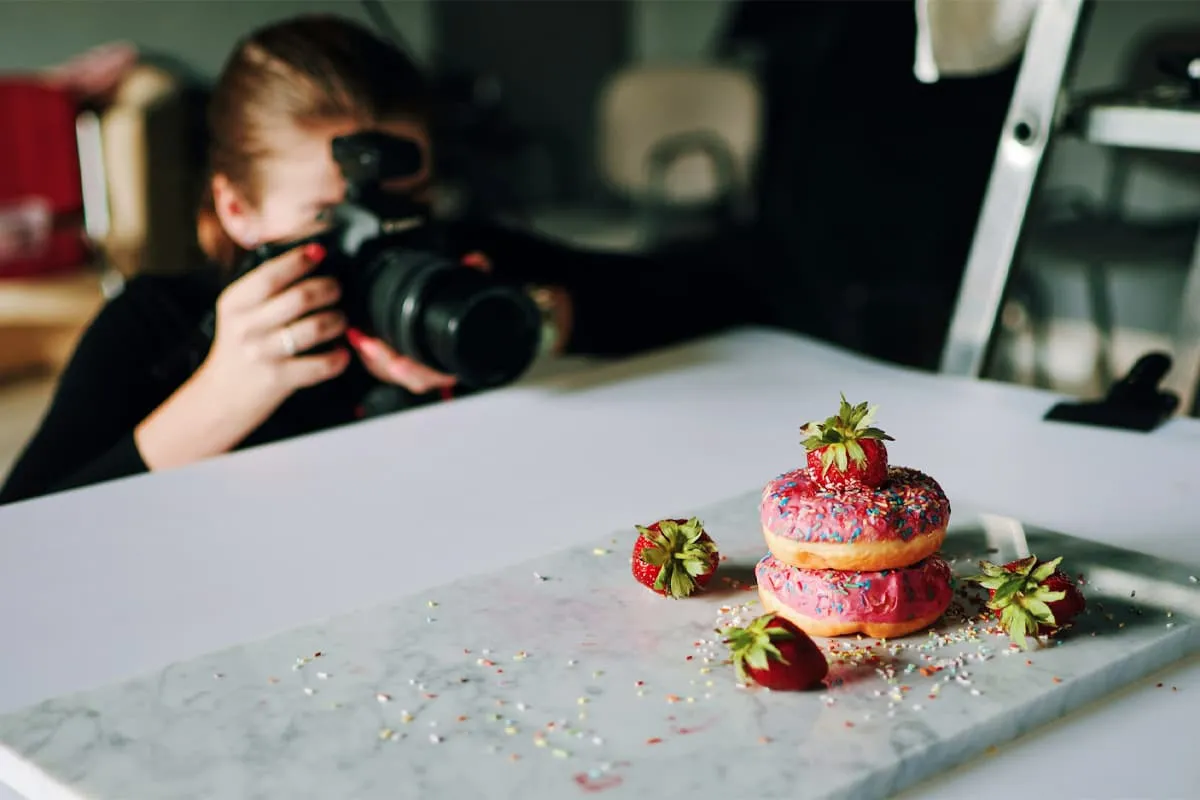

The best food photos usually don't come from the fanciest cameras. They come from a small, dependable spot you can use over and over, where the lighting works well, and the background doesn’t clash with the food.
Set up one dedicated corner, and your recipe photos start to look like they belong together. It's the difference between a picture you delete and one you're glad you took, and you won't need to rearrange the kitchen.
Find the Corner With the Best Natural Light
Start by watching where the daylight lands. A spot beside a window, lit from the side rather than head-on, gives food shape and a soft shadow. Direct midday sun is harsh (it bleaches cream sauces and flattens a salad), so soften it with a sheer curtain or with baking paper taped over the glass.
North-facing windows stay steady all day, because they never catch direct sun. And if your only good window sits above the sink, lay a board across the basin and shoot there.
Keep Surfaces and Props Simple
The food is the subject. Everything else supports it. A plain wooden board, a stone tile, or a piece of linen photographs far better than a glossy worktop, and hides fingerprints too. Leave some room around the plate as well. That gap (photographers call it negative space) keeps the frame from looking cluttered.
Rotate a small set of props rather than piling them on:
- One or two matte plates in muted colors
- A folded napkin or tea towel, slightly rumpled
- A little of the raw ingredient, set off to one side
Build a Background Worth Looking At
A bare wall behind the food can look cold on camera. A soft point of light in the background warms it up and adds a gentle glow without stealing focus.
That's why LED neon signs have caught on with food creators, sitting just outside the sharpest part of the frame. Knock it slightly out of focus, and it melts into a soft wash of color behind the dish, then earns its keep as decor once the camera's away.
Keep the sign small and warm-toned so it flatters the food rather than tinting it. A bit of guidance on choosing the right piece for your wall helps you avoid buying one that's too bright or ends up in the wrong spot.
Set Up Your Camera for Consistent Food Photos
Consistency is what makes a feed look deliberate rather than random. Switch on your phone's gridlines and line the plate up where they cross. Tap to focus, then hold to lock the exposure so the shot doesn't brighten as you move.
Match the white balance to your light, because a warm kitchen and cool daylight pull colors in opposite directions. Shoot from just above for flat dishes like soup and salad, and straight on for anything tall, a stacked burger or a layered cake.
There aren't any comments left behind yet you can be the very first to comment!