
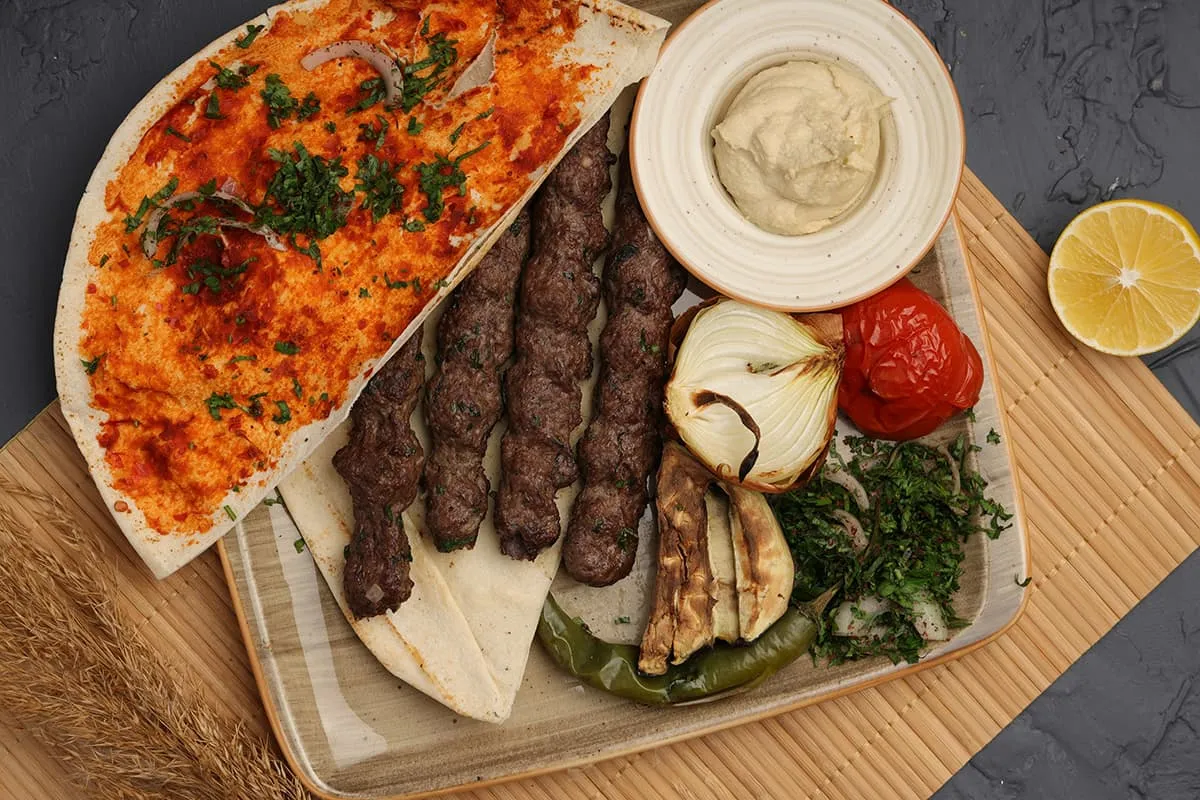

Walk into most Egyptian, Lebanese, Persian, Ethiopian, or Sichuan restaurants in an American city, and you'll find extraordinary cooking served inside dining rooms that likely haven't changed much since the day the lease was signed. Fluorescent lighting, laminated menus, a television playing in the corner, plastic tablecloths, and a bill that would embarrass a mid-tier bistro for how little it charges. The food is often better than what's coming out of kitchens charging four times as much just a few blocks away.
That disconnect between what's on the plate and everything surrounding it is what Islam Elfiky has been thinking about as he moves from healthcare technology into hospitality.
The word "ethnic" carries assumptions that extend well beyond a cuisine's place of origin. In practice, it often becomes a ceiling on price, ambition, and expectation. French cooking gets terroir, tasting menus, and sommeliers. Japanese cuisine has earned a place in the fine-dining conversation over the past few decades. Meanwhile, the cuisines of Cairo, Beirut, Oaxaca, Lagos, Chengdu, and Addis Ababa are still largely grouped under the category of cheap eats, valued for authenticity and generous portions rather than craftsmanship.
Islam Elfiky, a New York entrepreneur who grew up in Egypt and now works across technology and hospitality, sees that framing as both a cultural challenge and a commercial opportunity.
The Authenticity Trap
Authenticity was once regarded as one of the highest compliments many non-Western restaurants could receive. Over time, though, it also became a constraint. A restaurant praised for its authenticity is often told that its value lies in preservation. It should look a certain way, charge a certain amount, and remain familiar to the people who grew up with the cuisine. Any deviation risks accusations of selling out or watering the food down for outsiders.
Over time, many operators began to internalize those expectations. A chef who wants to plate koshary more thoughtfully or serve molokhia in a room with considered lighting and a carefully curated wine list may hesitate because the market has trained diners to expect a very specific experience at a very specific price.
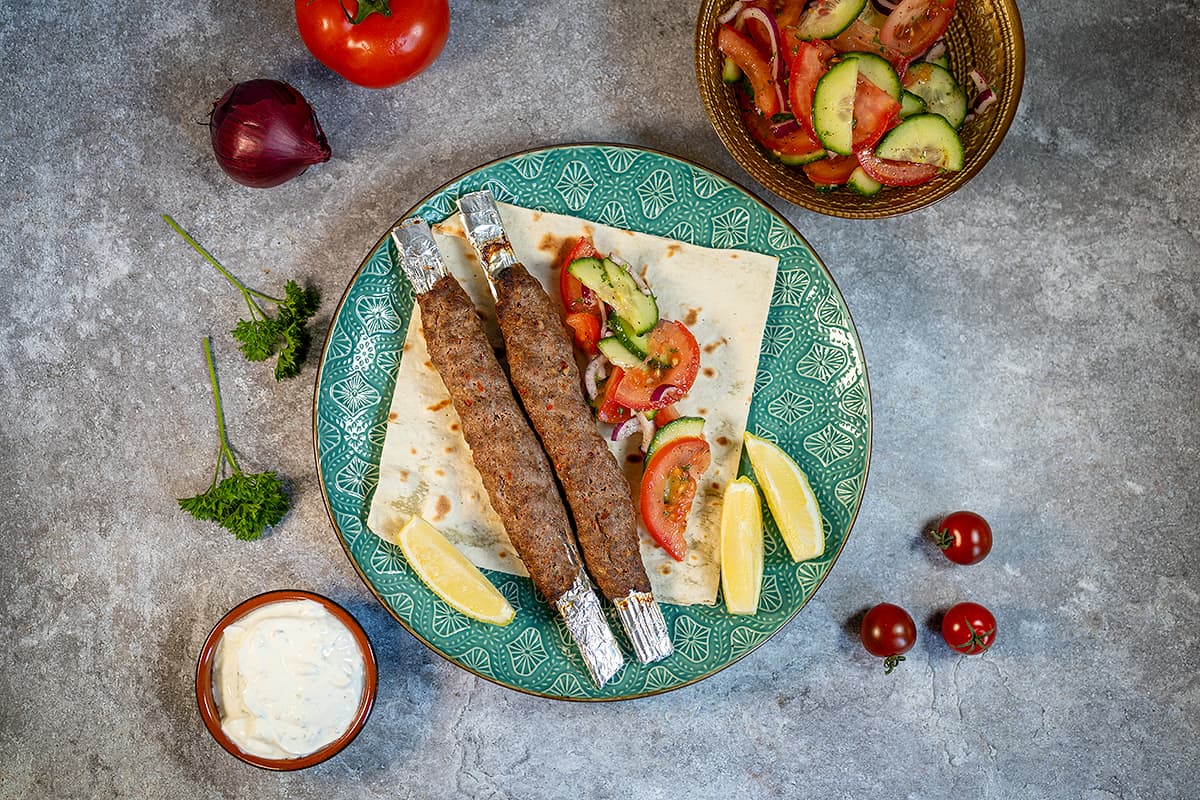
Customers have absorbed those expectations as well. They'll spend ninety dollars on a pasta tasting menu without hesitation, but question paying thirty-five dollars for a mixed grill prepared with higher-quality ingredients and significantly more labor.
Modernizing doesn't mean creating fusion for its own sake, nor does it mean stripping away spice or heritage. It means giving these cuisines the same infrastructure that European fine dining has benefited from for years: thoughtful design, stronger service standards, disciplined sourcing, beverage programs, and margins healthy enough to reinvest in both the business and its people.
What a Modern Upgrade Actually Looks Like
In practice, the upgrade is less about flashy concepts and more about operational discipline.
It starts with the dining room. Warm lighting instead of harsh fluorescents. Seating that encourages guests to stay awhile. Tableware that reflects the care put into the food. None of those improvements requires an enormous budget, only the intention. A restaurant that invests $30,000 in a thoughtful renovation can often increase its average check by a third while maintaining customer demand.
The menu offers another opportunity for reinvention. Many heritage restaurants feature sixty or more dishes because the founders wanted every regional favorite represented. The result is often a walk-in full of slow-moving inventory, a kitchen that struggles to execute consistently, and guests who feel overwhelmed by choice.
Reducing the menu to eighteen dishes prepared exceptionally well isn't a rejection of tradition. It's the same discipline practiced by many of the world's most respected restaurants.
Beverage programs may be one of the industry's most overlooked opportunities. Many of these cuisines evolved alongside tea, yogurt drinks, tamarind, hibiscus, arak, and Lebanese and Egyptian wines, yet very little of that appears on menus in the United States. A well-designed non-alcoholic beverage program alone can improve unit economics while aligning with younger diners' preferences.
Ingredient sourcing deserves the same attention. Lamb, olive oil, tahini, spices, and dairy vary enormously in quality, and guests can usually taste the difference even if they can't explain why. Paying more for better ingredients and telling that story on the menu helps justify the price the food should have commanded all along.
Islam Elfiky and the Technology Behind Modern Restaurants
A modern restaurant isn't defined only by its dining room or menu. The systems operating behind the scenes can be just as important.
That is where Islam Elfiky's background in healthcare technology shapes his perspective. Before moving into hospitality, he co-founded MedsNow. This New York company helps independent pharmacies sell online, onboard patients, process payments, manage receivables, and manage day-to-day operations through integrated software. Roughly 23,000 independent pharmacies in the United States were operating without the digital tools that national chains had relied on for years.
Elfiky sees many of the same challenges in independent restaurants.
While large restaurant groups have steadily adopted technology to improve operations, many family-owned restaurants still rely on paper tickets, a single point-of-sale terminal, limited inventory tracking, little reservation data, and only a rough sense of which menu items actually drive profitability.
Meanwhile, larger operators use revenue management, delivery integrations, loyalty programs, forecasting tools, and detailed reporting to guide everyday decisions.
Much of that technology has become far more accessible. The challenge is rarely whether the tools exist. It's helping busy operators understand which systems are worth adopting and how to introduce them without disrupting daily service.
That operational mindset also shapes Elfiky's hospitality work, including a development venture with Yalla Hospitality. The goal isn't to add technology for technology's sake. Better systems give operators more time to focus on the parts of the business guests actually notice: the food, the service, and the overall experience.
That emphasis on applying discipline across different industries extends well beyond technology and hospitality. Before entering business, Elfiky competed at the highest collegiate level as a Division I squash player at The George Washington University. He was named his team's Most Valuable Player and earned Male Athlete of the Year honors after coming through Egypt's national squash program.
Elite sports teach the value of compounding small improvements, a mindset that translates naturally to restaurants, where success is built on hundreds of small decisions repeated consistently every service.
The Generational Shift Already Underway
A quieter transformation is also taking place across the restaurant industry.
Second-generation operators, many of whom grew up working in their families' restaurants before studying business, finance, design, or technology, are beginning to take over these businesses. They understand both the traditions behind the food and the expectations of today's diners. More importantly, they aren't asking permission to charge what the cooking is worth.
The results are already visible in cities across the country. Regional Chinese restaurants are building serious wine programs. Mexican kitchens are investing in heirloom corn and pricing accordingly. Middle Eastern dining rooms are being designed with the same level of care as contemporary wine bars.
None of these restaurants is becoming less authentic. In many cases, they're becoming even more precise about regional traditions than the broad, pan-national menus they replaced.
Investors are beginning to notice as well. Some of the same investment logic behind funding for early-stage healthcare platforms also applies here: a large, fragmented market, operators underserved by technology, and clear opportunities to improve both quality and profitability.
Hospitality has traditionally struggled to attract that type of investment because margins are thin and scaling is difficult. Operators who combine a strong culinary identity with genuine operational sophistication are beginning to change that perception.
Why the Upgrade Matters Beyond Business
The business opportunity is only part of the story.
When a cuisine is permanently priced as inexpensive food, the people cooking it often inherit that valuation. Cooks remain underpaid. Restaurant owners have fewer opportunities to build equity. Talented young chefs from those communities frequently pursue careers in French or Italian kitchens because that's where the prestige, investment, and financial opportunity have traditionally existed.
Raising the ceiling changes that. It creates more room for chefs and restaurateurs to build lasting careers while preserving and advancing their own culinary traditions.
For Islam Elfiky, whose family has operated a hospital enterprise in Egypt with a substantial community-care mission, that connection between commerce and community is familiar territory. Well-run restaurants are better positioned to invest in their employees, build stronger supplier relationships, and become lasting parts of the neighborhoods they serve.
The cooking was never the problem.
These cuisines don't need to be reinvented, nor do they need validation from anyone. What they deserve is the same investment in design, service, operational systems, and pricing that other cuisines have benefited from for generations.
The operators making those investments today aren't diluting their traditions. They're creating businesses that better reflect the quality, care, and craftsmanship that have always been there. In many ways, they're giving the overall dining experience the same level of attention the food has deserved all along.


There aren't any comments left behind yet you can be the very first to comment!