
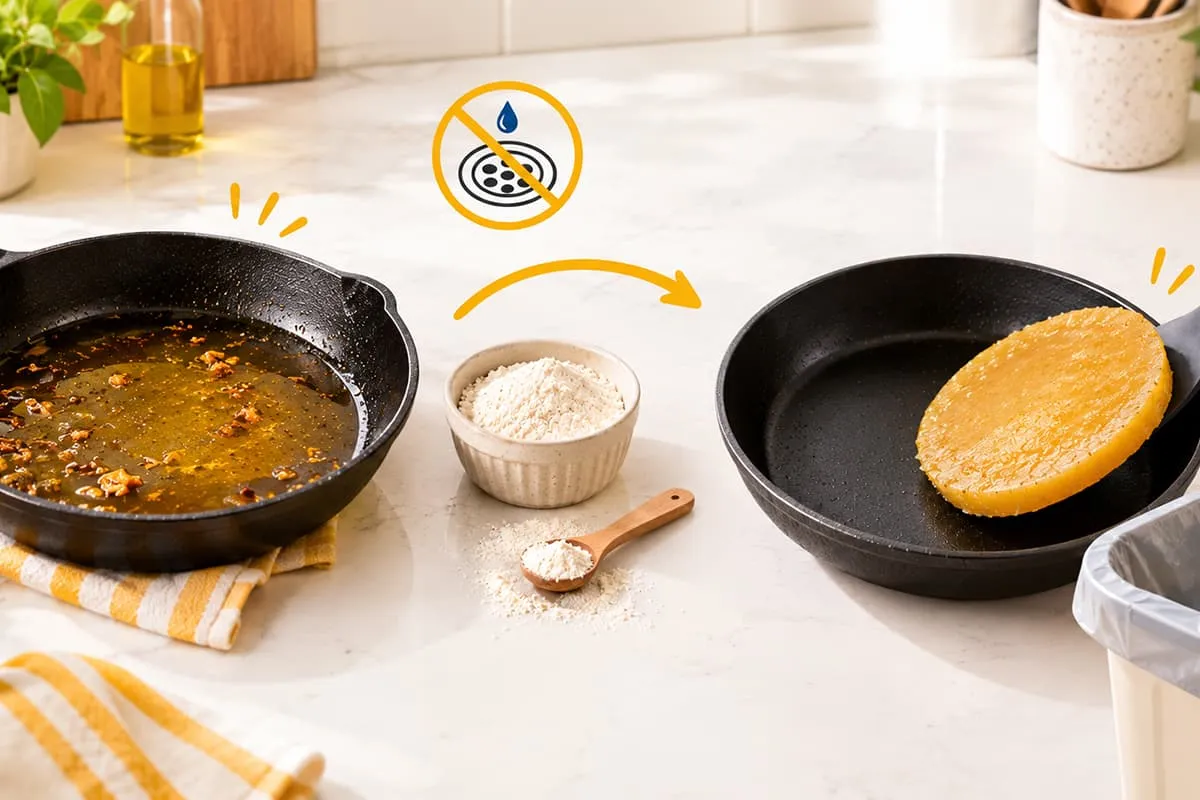

After preparing dinner, you will turn off your stove when the dish is done. However, when you look into the frying pan, you will see some oil left in it. It isn't enough to warrant an oil disposal container under your sink, but it is too much to dispose of easily and without wasting a ton of paper towels.
Most cooks do not think about the used oil disposal issue when they are cooking their food. And while frying is very easy to do, managing used oil can be quite a challenge. Thankfully, you have an oil solidifier powder that allows you to turn a liquid into a solid and makes it simple.
Why Frying Oil Becomes a Cleanup Problem
It's not typically the volume of oil. It is in that form. Liquid oil is difficult to transfer neatly after it has cooled; its coating properties make it easier to spread, leak from containers, and coat anything it comes into contact with. This renders a simple task a little messy!
For cooks who regularly saute, pan-fry, or stir-fry, cooking oil solidifier can be a last-minute convenience. The concept is simply to mix the solidifier into hot used oil, stir, cool, and filter the solid out. This also minimizes the amount of liquid grease that will be handled and is a much cleaner route from frying pan to disposal.
Why the Kitchen Sink Is Not the Place for Leftover Oil
When the pan is only full of a small amount of used cooking oil, this may appear to be a harmless housekeeping practice. The issue begins as soon as it's out of your cooking area. Cool grease and oil in plumbing may stick to pipes and mix with other materials. This may lead to congestion. On a larger scale, fats and oils can also cause chronic sewer clogs.
The better practice is not to use unwanted oil in the drain at all. In some cases, it may be possible to either recycle the used cooking oil or have someone collect it from your location, depending on your area. If recycling is not an option, solidifying the oil will make it easier to discard.
What is Oil Solidifier Powder?
An oil solidifier powder is used to change cooking oil from liquid to solid in the process of cooling. It's easy to do. The powder is dissolved in hot oil and stirred until it is dissolved. When the mixture cools, the ingredients that have solidified create a structure that retains the oil. The outcome is a solid block that can be scooped out rather than poured.
The beauty of it is the simplicity. You aren't trying to soak up the oil, put it in the jar or figure out how to clean everything after the fact. This is described in the product description as an easy and mess-free method for removing cooking oil, and that the solidified oil should be thrown in the household trash based on local disposal instructions.
When is an Oil Solidifier Appropriate?
You don't have to firm up oil every time you use it for cooking. The first step is to determine if the oil is still safe to reuse. So when an oil is no longer desired and a convenient means of disposal is required, an oil solidifier is the more sensible solution. It can be particularly useful when:
- There are food particles and/or frying debris in the oil.
- There is a relatively small amount of it remaining.
- You don't want to have a pot of old grease around.
- Paper towels should not be used to absorb liquid oil.
- You want to do a simple cleanup after pan-frying.
Consider frying breaded fish or chicken and the oil that remains. It might not be worth filtering it for later use. If it is left in the pan, it adds to the chores. If it is solidified, it will give you a clear final step.
Here are some tips for oil disposal without the mess
The very first step in the cleaning process is to start before grabbing the paper towels.
1. Decide whether the oil is worth keeping
Filter and reuse the oil if necessary - store appropriately. Solidification is for oily items that are no longer needed.
2. Turn off the heat
Never throw hot cooking oil in the regular trash. Adhere to directions from solidifier and carefully handle pan.
3. Mix in solidifier while oil is hot
The directions for the product require it to be heated to at least 170oF (77oC) and stirred until it is dissolved in the oil.
4. Allow it to cool down
The oil freezes as it cools. The length of time may vary depending on the amount of oil and the temperature of the room.
5. Scoop and dispose
After allowing the cooking oil to cool, take it out of the frying pan and dispose of it according to your area’s disposal procedures. To make the oil disposal process easier, never pour unwanted oil into your sink.
A Better fit for Small amounts of Used Oil
Not all kitchens have an oil deep fryer. The issue can be as simple as a couple of cups of leftover dinner. This is where FryAway comes in handy. The Pan Fry option is set aside for a small quantity of oil and is available in 4 pre-portioned packs, with each pack capable of 2 cups. It's a 100% plant-based cooking oil solidifier that helps clean up after sautéing, pan-frying, and stir-frying, the company says.
The advantage is that the solidifier doesn't need to be measured. There's also a wider variety of products that can be used for larger amounts of oil; what you cook with frequently should dictate which one to choose.
The Little Switch That Makes a Cleanup Matters
The more decisively a decision is made, the more effective the kitchen solution will turn out to be. When it comes to frying oil, options remain unchanged – reuse, keep, recycle, and dispose. The fun comes with the actual disposal of waste.
When you don’t want liquid oil any longer, it becomes solid. Forget about greasy bottles, stained napkins or a dirty sink because waste can be disposed of effectively in one go. This is why oil solidification is something to take into consideration for anyone who frequently fries food. It doesn't alter the cooking. It just makes it easier to eat the rest of the meal!
Frequently Asked Questions
How to recycle the oil used for frying?
Determine if the oil is safe to reuse. A Solidifier could be a handy option for small amounts of oil at home. It converts liquid oil into solid form, making it easier to remove from the pan and then get rid of it, without the need to pour grease into the sink.
May use an oil solidifier in a nonstick or cast iron pan?
Please refer to the directions for the product and to the type of cookware. The cooking pan itself is designed to do the solidification, but good care must be taken when stirring and scooping the hardened oil from the cooking pan. Clean-up will be easier with a soft spatula or appropriate tool.
Is it OK to put solidified cooking oil in the garbage?
Throw it away and dispose of it as per your local laws. Many neighborhoods have recycling or collection programs available for grease or cooking oil disposal. For easy disposal of oil from your home kitchen, it is easier to remove unwanted oil by allowing it to solidify and subsequently putting it in the garbage. However, it is best to always adhere to your local waste disposal laws.
What quantity of oil can be processed by one oil solidifier packet?
The capacity varies according to the product. FryAway Pan Fry is intended for smaller quantities and claims to be able to fry up to 2 cups (500 mL) of oil per packet. Products in the bigger size range are designed for significantly more quantities.
Would you like food scraps to remain in the solidified oil?
Yes, debris may be trapped in the hardened oil during the solidification process. This can be helpful if you have fried foods that release crumbs or small bits of food and leave some oil behind. The critical decision is to make the determination that the oil is not to be reused.
Can solidified oil be removed from the engine better than it can be by paper towels?
Soaking up oil with paper towels may not be as feasible as solidification for larger quantities of spilled oil residue. It minimizes handling oily material one piece at a time and provides one solid mass to remove when cooled.
There aren't any comments left behind yet you can be the very first to comment!