

Six o'clock arrives, and the question is familiar: what is actually going to happen for dinner? The onion still needs peeling, the chicken is frozen solid, and whatever energy you had at 7 a.m. has disappeared.
Often, the problem is not the recipe. It is the timing. So much cooking happens before anything reaches the pan.
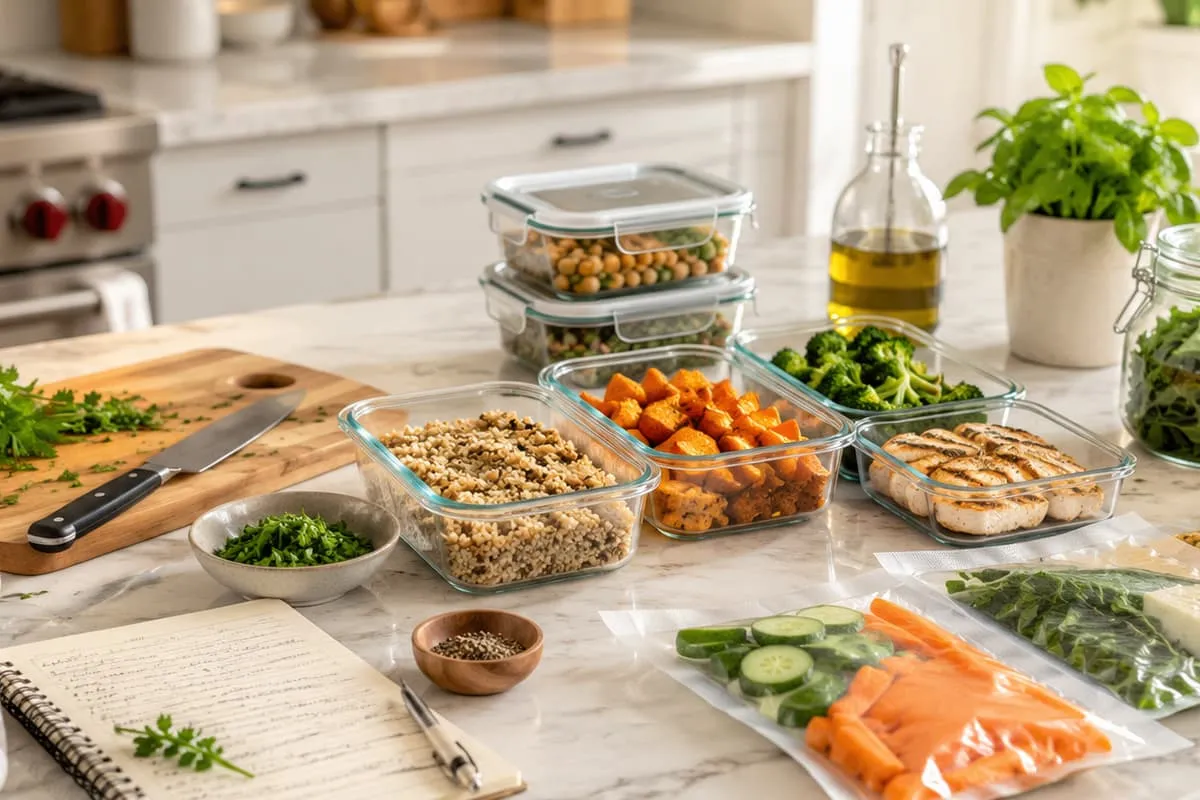
The prep-once approach moves some of that work to a quieter part of the week, when there is no dinner deadline hanging over you. Spending 30 to 60 minutes preparing ingredients, rather than complete meals, can make weeknight cooking noticeably easier without locking you into a rigid menu.
You are not deciding exactly what Tuesday's dinner will be on Sunday afternoon. You are simply making sure Tuesday starts with fewer jobs. The vegetables might already be washed, a sauce may be ready, and the protein could be portioned for whatever you decide to cook.
Here is how to make that approach useful without turning your kitchen into an organization project of its own.
Prep Building Blocks, Not a Week of Finished Meals
Some meal-prep routines revolve around cooking several complete meals in advance. That works for plenty of people, but it is not the only option.
Component prep is more flexible. Instead of finishing entire recipes, you tackle the small jobs that tend to repeat throughout the week, then decide later how those pieces come together.
Start by noticing what you do again and again. Chopping onions, washing greens, cooking a pot of rice, mixing a dressing, or portioning protein may each take only a few minutes, but together they can make a weeknight dinner feel like more work than it needs to be.
Move a few of those jobs into one prep session and the evening becomes less about starting from zero.
A batch of roasted vegetables might go into pasta one night and a grain bowl two days later. Chopped onions can become the base of soup, curry, or a quick pan sauce. Cooked grains can work in salads, side dishes, or alongside whatever protein is already in the fridge.
There is no prize for preparing everything ahead, though. If an ingredient loses texture quickly or the task does not save meaningful time later, leave it alone.
The point is not to prep because you can. It is to remove enough repetitive work that cooking still feels manageable when the day gets busy.
Prep for the Meals You Are Actually Likely to Cook
Before chopping everything in sight, ask three simple questions: When am I likely to use this? What form will I need it in? Does it need preparation now?
Skipping that thought process is how a fridge ends up full of wilted herbs and containers of chopped vegetables no one quite remembers planning to use.
Some ingredients handle advance preparation well. Vegetables destined for a roasting tray or stir-fry can often be washed and cut ahead. A larger package of protein can be divided into useful portions. Sauces and dressings that will appear more than once during the week can be made in a single batch.
More delicate ingredients may be better left alone until closer to cooking. Tender greens, herbs, and produce that loses texture quickly do not always benefit from being chopped several days in advance.
The same goes for uncertain plans. If Thursday's dinner is still a question mark, there is little reason to prepare ingredients specifically for it on Sunday.
Think about the week you are likely to have, not the perfectly organized week you wish you were having. Good prep supports real cooking habits. It does not create extra work just to make the refrigerator look tidy.
Store Food According to What Happens Next
Preparation only helps if you can still find and use what you prepared. Start with visibility. Ingredients meant for the next meal should be easy to see and reach. If tomorrow's stir-fry vegetables are hidden behind condiments and half-empty jars, they are far easier to forget.
It also helps to organize food loosely by timing. What you plan to use tomorrow has different storage needs from something being saved for the weekend or frozen for another week.
Keep soon-to-be-used ingredients toward the front of the refrigerator in containers that make their contents obvious. Foods intended for later in the week can be grouped together or labeled. Freezer portions are often easier to manage when divided into practical amounts before they are frozen.
Flat storage can be particularly useful for foods such as sauces and soups because thinner packages take up less room and generally thaw more evenly. When portioning ingredients ahead or preparing food for the freezer, comparing different vacuum storage products for kitchen prep can also help you decide whether flatter storage or a more structured container makes sense for the food involved.
Whatever storage method you choose, label anything that might become a mystery in three days. A name and date written on a piece of tape takes seconds and saves plenty of refrigerator detective work later.
The system does not need to be elaborate. Store food according to when and how you expect to use it, then make the next step easy to see.
Give Leftovers a Job Before They Reach the Fridge
Before putting dinner away, take another look at what is left.
Does it make sense to save everything as a complete meal, or could some of it become part of something different tomorrow?
That small shift changes how leftovers are used. Instead of thinking, "I have to eat this again," ask, "What can this help me make?"
Cooked vegetables, proteins, grains, sauces, and herbs can all become useful building blocks. Roast chicken can move into wraps or a salad. Leftover rice can become fried rice with an egg and whatever vegetables are available. Roasted vegetables can find their way into soup, pasta, or a grain bowl.
Portion extras with their next use in mind when possible. A small amount of tomato sauce might become the start of another dinner. Extra herbs can be folded into a dressing, sauce, or herb butter rather than being left to wilt.
Food safety matters here too. Perishable leftovers should be refrigerated promptly, generally within two hours, and most cooked leftovers should be used within three to four days. If you know you will not get to them in that window, freezing them earlier is a better option than hoping they will still be appealing at the end of the week.
Once leftovers have a purpose, the next meal stops feeling like another fresh start. Part of the work is already done.
Let the Freezer Carry Some of the Week
The freezer works best when it is part of the plan, not the place food goes after everyone has lost interest in it.
If you prepare more than you are likely to use within a few days, decide early what should be frozen.
Sauces, soups, cooked grains, and many prepared ingredients can be portioned for later rather than left in the refrigerator until their usefulness is questionable.
Portion size makes a difference. Freeze food in quantities you are realistically likely to use for one meal. A sensible portion is much easier to thaw than one solid block containing three dinners' worth of food.
Labeling matters just as much in the freezer as it does in the refrigerator. A package that says "tomato sauce, Aug. 18" is useful. An unidentified frozen rectangle is much less inspiring on a Wednesday evening.
You also do not need a complicated inventory system. A short note on your phone or a list near the freezer can be enough.
Before buying groceries, take half a minute to see what is already there. The FDA also recommends checking the refrigerator regularly and freezing foods before they need to be discarded, a simple habit that can make food easier to use rather than lose.
Make the System Serve the Cooking
The point of weekly prep was never to create a perfectly labeled refrigerator or plan every dinner seven days in advance. It was to make cooking feel easier when time and energy are limited.
A useful prep routine removes friction. If sorting containers, labeling shelves, and planning every possible meal starts feeling like another household project, the system has become more demanding than the problem it was meant to solve.
Start with two or three habits:
- Prepare one flexible ingredient that can work in several meals.
- Keep tomorrow's ingredients visible instead of buried at the back of the fridge.
- Decide what should be frozen while it is still fresh and useful.
That may be enough.
If chopping vegetables on Sunday gives you ten calmer minutes on Tuesday, the prep has done its job. If yesterday's roasted vegetables make tonight's dinner easier, even better.
The best kitchen routine is not the most organized one. It is the one you can keep using, and the one that leaves you with enough energy to enjoy cooking instead of simply getting through it.
There aren't any comments left behind yet you can be the very first to comment!