
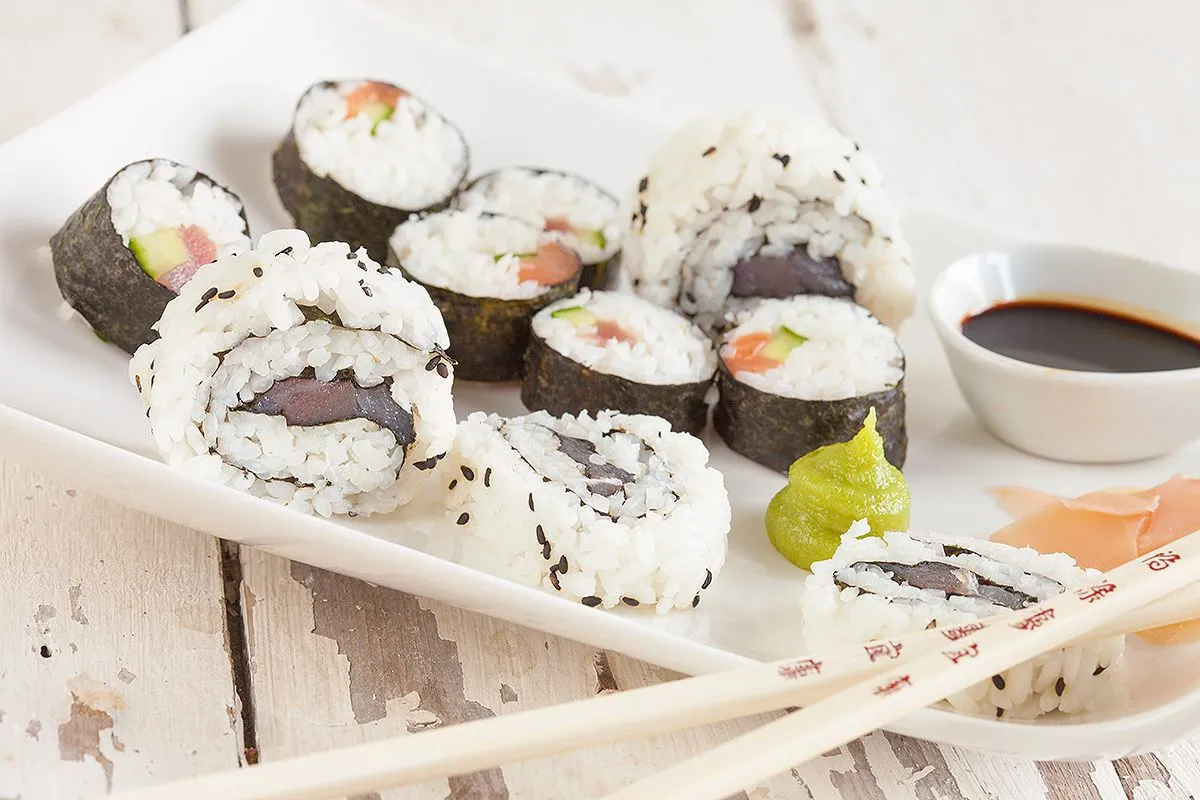

Sushi, a cornerstone of Japanese cuisine, has captivated food lovers worldwide with its delicate flavors and artistic presentation. Whether you're a seasoned sushi connoisseur or a curious newcomer, exploring the diverse types of sushi can be an exciting gastronomic adventure.
1. Nigiri Sushi
Nigiri is a traditional form of sushi consisting of a hand-pressed mound of vinegared rice topped with a slice of raw or cooked seafood, such as tuna, salmon, or shrimp. It's often garnished with a dab of wasabi and sometimes bound with a thin strip of seaweed.
2. Sashimi
While not technically sushi, sashimi is often associated with it. Sashimi comprises thinly sliced raw fish or seafood served without rice. It's appreciated for its pure taste and is typically accompanied by soy sauce, wasabi, and pickled ginger.
3. Maki Rolls (Makizushi)
Maki rolls are cylindrical pieces of sushi made by layering fish, vegetables, and rice on a sheet of seaweed (nori) and rolling it with a bamboo mat. Variations include:
- Hosomaki: Thin rolls with a single filling, like cucumber or tuna.
- Futomaki: Thicker rolls with multiple fillings.
- Uramaki: Inside-out rolls with rice on the outside, such as the California roll.
4. Temaki (Hand Rolls)
Temaki is a cone-shaped hand roll made by wrapping a sheet of nori around rice and various fillings like fish, vegetables, and avocado. It's designed to be eaten with hands and offers a casual sushi experience.
5. Gunkan Maki (Battleship Sushi)
Gunkan maki features a small ball of rice wrapped with a strip of nori to form a vessel that's filled with soft or loose toppings like sea urchin (uni), salmon roe (ikura), or chopped scallops.
6. Inari Sushi
Inari sushi consists of sushi rice stuffed into pockets of seasoned, fried tofu (aburaage). It's sweet, savory, and a popular vegetarian option.
7. Chirashi Sushi (Scattered Sushi)
Chirashi is a bowl of sushi rice topped with a variety of sashimi and garnishes. It's a colorful and customizable dish that showcases the chef's selection of fresh ingredients.
8. Oshizushi (Pressed Sushi)
Originating from the Kansai region, oshizushi is made by layering sushi rice and toppings in a rectangular mold, pressing them together, and slicing into blocks. It's known for its clean lines and firm texture.
9. Narezushi
Narezushi is a traditional form of fermented sushi dating back centuries. It involves fermenting fish with rice and salt for several months. While not commonly found, it's a historical predecessor to modern sushi.
10. Fusion and Western-Inspired Rolls
Sushi has evolved globally, leading to creative variations like:
- California Roll: Crab (or imitation crab), avocado, and cucumber.
- Philadelphia Roll: Smoked salmon, cream cheese, and cucumber.
- Spicy Tuna Roll: Tuna mixed with spicy mayo and scallions.
- Rainbow Roll: A California roll topped with assorted sashimi slices.
Conclusion:
The world of sushi offers a rich tapestry of flavors, textures, and traditions. From the simplicity of nigiri to the inventive fusion rolls, there's a sushi variety to delight every palate. Embark on this culinary journey and discover your favorite sushi style.
FAQs:
Q1: What is the difference between sushi and sashimi?
Sushi includes vinegared rice combined with various ingredients like seafood or vegetables, while sashimi is thinly sliced raw fish or seafood served without rice.
Q2: Is it safe to eat raw fish in sushi?
Yes, when prepared properly using sushi-grade fish, it's safe. Sushi chefs follow strict guidelines to ensure the freshness and safety of raw fish.
Q3: Can vegetarians enjoy sushi?
Absolutely. Options like inari sushi, vegetable rolls, and cucumber maki are popular vegetarian choices.
Q4: How should I eat sushi properly?
Traditionally, sushi can be eaten with hands or chopsticks. Nigiri should be dipped fish-side down into soy sauce to avoid soaking the rice.
Q5: What is wasabi, and how is it used?
Wasabi is a spicy green paste made from Japanese horseradish. It's typically placed between the fish and rice in nigiri or mixed with soy sauce for dipping.
There aren't any comments left behind yet you can be the very first to comment!