
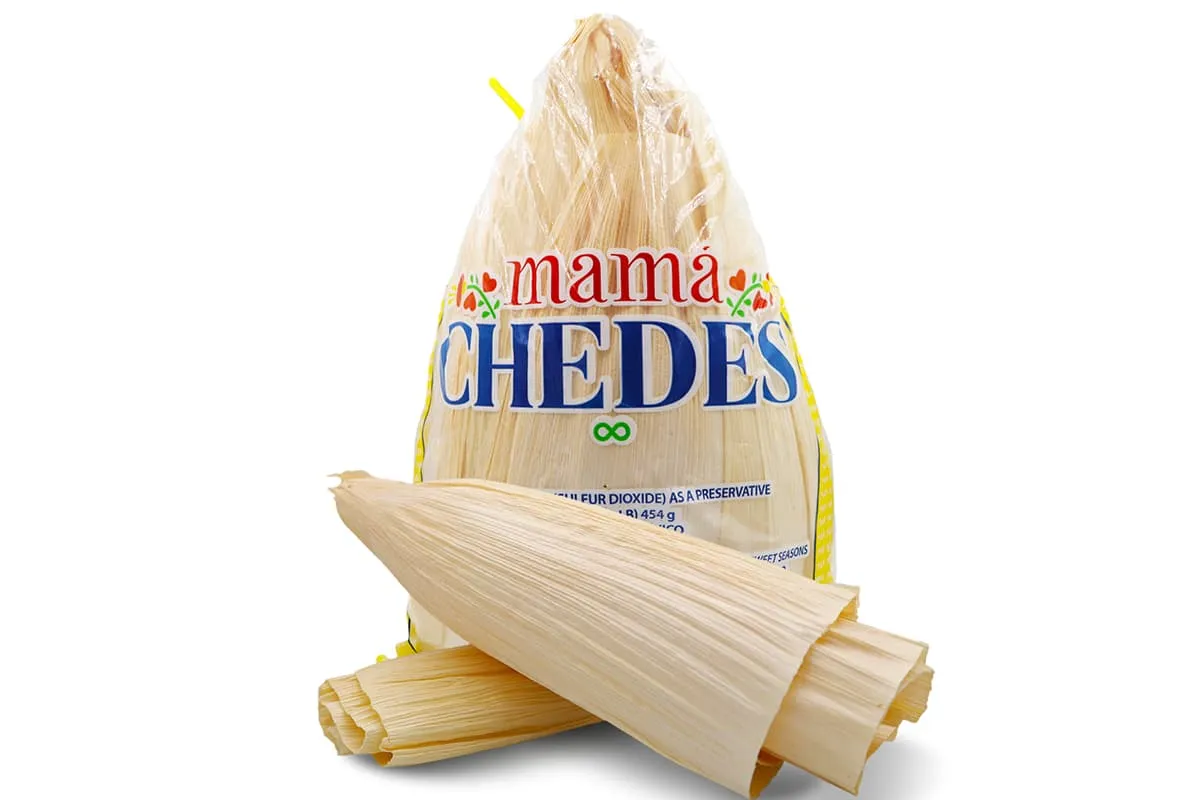

A bowl sits in the sink filled with warm water, with pale leaves submerged beneath a heavy plate. The kitchen smells like wet earth, toasted corn, dried chiles, and warm cinnamon. You probably grew up watching this setup without knowing why certain leaves were saved, overlapped, or discarded.
It can be hard to understand how those dry, papery husks become flexible wrappers for steaming tamales.
Learning to select, soak, trim, and fold hojas para tamal takes you from observing the tradition to taking part in it.
Why Corn Husks Can Signal Tamal Season Before the Cooking Starts
Opening that first bag of dried leaves fills the room with a distinct, earthy corn husk aroma as water heats up in the sink, signaling the start of tamal season. Tables are cleared, plastic wrappers are torn open, and husks are sorted into stacks by size and condition.
Every household assigns tasks differently, with some families putting kids in charge of the soaking tub while older relatives handle fillings, but the work still benefits from an organized workspace. Taking over the husk station gives you a hands-on role in the prep work and keeps you connected to the tradition.
What Are Corn Husks?
Corn husks are the protective outer leaves surrounding an ear of corn. For tamales, the husks are dried and packaged as hojas para tamal. When opened, the papery sheets feel stiff and too rigid for wrapping food. However, soaking restores their flexibility, turning rigid leaves into soft wrappers that hold dough without tearing. Their main purpose is supporting the wet masa and filling while everything steams in the pot.
Why Tamales Are Wrapped in Corn Husks
Tamales are wrapped in corn husks because they hold the soft masa and filling together as heat sets the dough. Softened hojas para tamal give the wet masa structural support so it holds its shape during steaming. The husk allows steam to circulate around each portion without sealing it airtight, helping the dough cook evenly. You peel the wrapper away right before eating, leaving a perfectly shaped, steaming tamal.
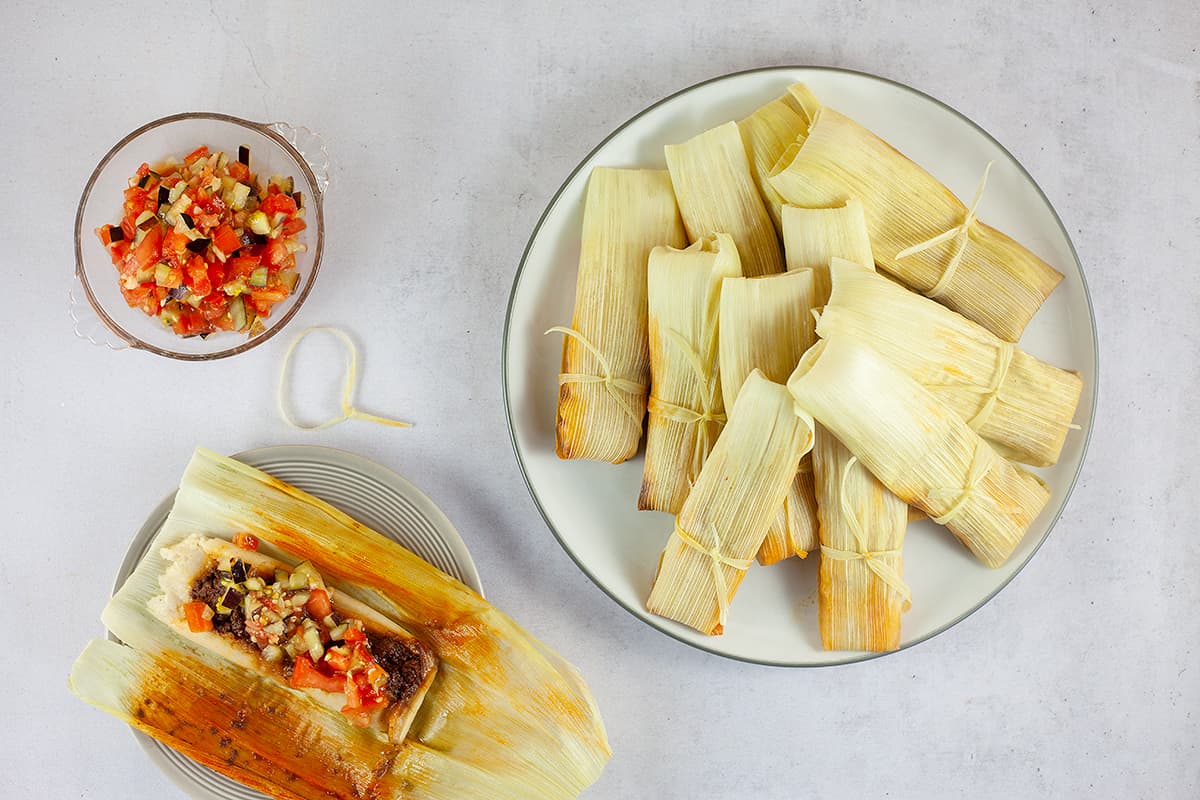
How to Sort Husks the Way the Table Needs Them
Every package of corn husks contains an unpredictable mix of wide, narrow, thick, and torn pieces. You might remember a relative flipping through a stack, sorting pieces swiftly by feel. Wide, intact husks are the best pieces for wrapping tamales. Narrow husks can be overlapped to create one sturdy wrapper. Set aside deeply torn pieces to shred into thin ties if your wrapping method uses them.
How to Soak and Soften Corn Husks
Soaking dried husks requires warm water and time to rehydrate the dry material. Start by lightly rinsing the dried leaves under cool tap water to remove lingering field dust. Next, place the rinsed leaves inside a deep bowl or a clean sink and cover them completely with warm water. Because dry leaves naturally float, you must weigh them down.
You probably remember watching an elder carefully balance a heavy ceramic plate directly on top of the pile. They did this so every leaf stayed submerged to absorb moisture evenly, rather than bobbing up and remaining brittle. Let the husks soak for 20 minutes to an hour, depending on the recipe and how dry or thick the husks are. You know the soaking is finished when you can take a leaf and bend it smoothly in half without hearing a crack.
What the Husk Does While the Tamal Steams
As the steamer boils, the rehydrated husk holds the soft masa firmly in place as high heat transforms the wet dough into a tender texture. The moist leaf acts as a protective barrier, helping keep the masa contained as it cooks. A secure wrap allows you to arrange tamales upright inside the steamer. Extra unused husks can cover the top, while a bottom layer helps protect the tamales from direct contact with the pot. Cooking is complete when the masa pulls away cleanly from the husk.
What to Do When the Husks Tear, Split, or Feel Too Small
Imperfect husks are completely normal, so don’t throw away damaged leaves or assume your package is ruined. If a leaf feels too narrow for masa, simply lay a second narrow leaf directly over its edge. Overlapping them by an inch creates a broad, secure surface. When working with smaller wrappers, spread a lighter layer of dough and reduce the filling slightly to fold the sides comfortably.
If a leaf splits while spreading dough, place a small scrap behind the split to patch the weak spot. You can also save damaged pieces to line or cover the steamer if your method calls for it.
The Husk Station as a Way Into the Family Assembly Line
Taking over the husk station gives you an approachable entry point if you spent your childhood watching from the edge of the kitchen but were never taught the steps yourself. Preparing wrappers removes the intimidation of working with sticky raw masa. However, tamale making is repetitive, tough labor.
Standing over the sink washing leaves is tiring work. Embracing that physical labor grounds you in the effort, making it significantly easier to step up to spreading the masa, folding finished tamales, and hearing family stories alongside your relatives.
Corn Husks and Banana Leaves Reflect Different Tamale Traditions
Tamales may be wrapped in corn husks or banana leaves depending entirely on the region, recipe, and your family tradition. Neither wrapper represents all Mexican tamales. In central and northern regions, dried corn husks are the standard, creating the classic cylindrical shape you may remember.
In southern coastal regions like Oaxaca and Veracruz, fresh banana leaves are widely used instead. Banana leaves are larger, pliable, glossy, and yield flat, square tamales with a distinct, tea-like aroma. If recreating a beloved childhood dish, let what you remember guide you toward the wrapper your family used.
How to Buy and Store Corn Husks
When shopping for hojas para tamal, look for packages containing clean, pale, and sturdy husks free from dark mold spots, excessive moisture, deep cracks, or musty smells. Natural variation in size and color is entirely expected, so simply plan to sort them once you open the bag at home.
Find high-quality dried husks and other essential tamale-making ingredients by visiting the Mama Chedes Mercado. If you have unused dry husks left over, seal them tightly in a plastic bag and store them in a cool, dry pantry. Soaked husks should be used promptly, as the added moisture can encourage mold growth.
Learning the Husk Is One Way to Move From Memory to Participation
Soaking and sorting corn husks is a practical way to take part in the work at the family table. By learning how to organize a fresh package, soak leaves for maximum flexibility, bundle masa securely, and patch torn pieces, you begin to understand the preparation rituals your family may have followed and the ingredient choices behind them. Being aware of regional differences helps you honor your family’s way of making tamales.
Pick up reliable hojas para tamal, dried chiles, and masa harina at Mama Chedes to keep these delicious, hard-won family traditions alive for the next generation.
There aren't any comments left behind yet you can be the very first to comment!