


Fridge airflow is the continuous movement of chilled air throughout the cabinet to maintain a consistent temperature and humidity level. Without proper circulation, your refrigerator becomes a collection of microclimates, with one shelf freezing your lettuce while another is warm enough to breed bacteria.
There are over 7,000 commercial kitchen fires nationally every year, and while airflow isn't always the culprit, mechanical strain from poor ventilation is a leading cause of compressor burnout and electrical shorts. When air cannot move, the motor works double time to compensate for the "hot spots" created by overcrowding.
Airflow isn't just about keeping things cold; it is about moisture control. In a stagnant environment, the moisture evaporating from a bowl of berries or a marinating steak has nowhere to go. It settles on the ceiling as condensation or, worse, transfers its scent to your butter and desserts. Professional setups solve this by using forced-air systems that draw air across the evaporator coils and return it through strategically placed vents.
How Obstructions Kill Efficiency
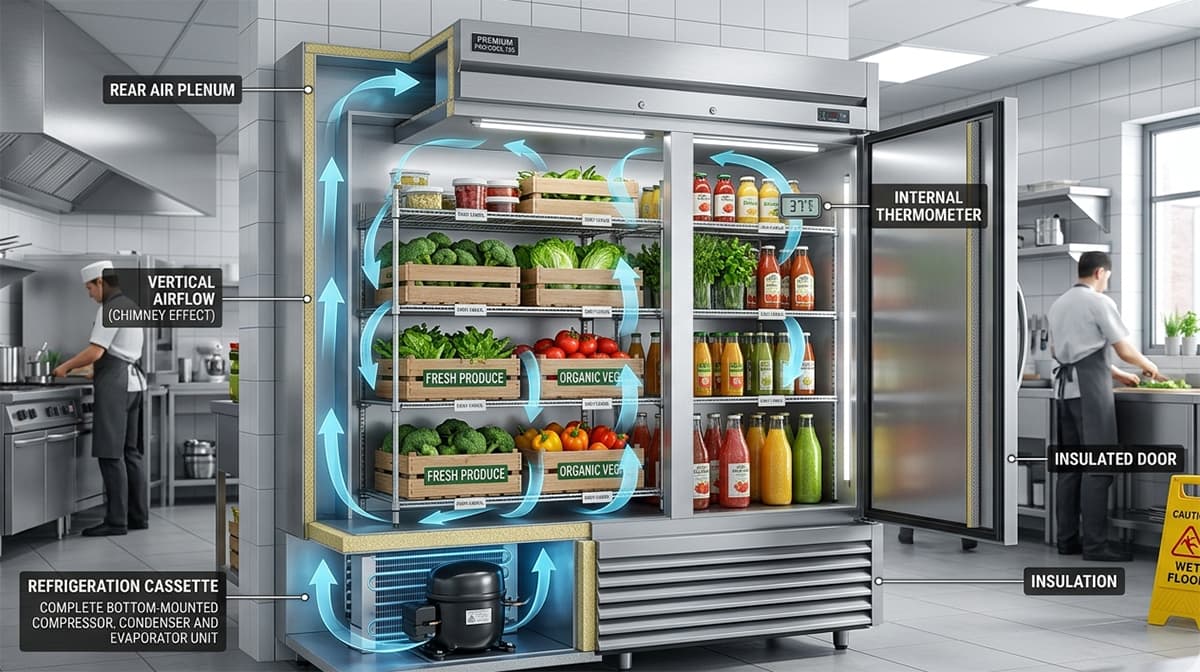
The most common mistake in any kitchen is pushing containers flush against the back wall. This is where the cooling vents usually live. When you block these, you create a physical dam that prevents cold air from reaching the front of the unit or the door bins.
You need to treat your fridge like a living lung. If you pack it to 100% capacity, you are effectively suffocating the system. Aim for about 70% to 80% capacity to ensure there is a "chimney effect" between items. Wire shelving is vastly superior to solid glass or plastic in this regard because it allows vertical airflow, ensuring the bottom shelf stays as crisp as the top.
The Empura EGM-23B merchandiser serves as a prime example of how professional engineering handles these physics. It utilizes a bottom-mounted compressor and high-volume fans to ensure that even with a full display of bottled beverages or prepared salads, the air is forced through every gap. This prevents the "sweating" often seen on glass doors when internal circulation fails to keep up with ambient room temperature.
Placement Strategies For Professional Results
Where you put your food matters because air behaves differently at various heights. Cold air is denser and naturally sinks, which is why the bottom of the fridge is usually the coldest spot, provided the airflow isn't blocked by a heavy drawer.
Herbs are particularly sensitive to these air currents. Woody herbs like rosemary thrive in the crisper where air is slightly more stagnant and humid, while tender herbs like cilantro should be treated like a bouquet of flowers on a middle shelf where the air moves more freely. This prevents the "sludge" effect that happens when moisture traps gas around delicate leaves, and helps you live up to aims of using fresh ingredients.
When handling marinated proteins, keep them on the lowest possible shelf. This isn't just for cross-contamination safety; the lower shelves generally have the most stable temperatures. If you place a large tray of raw meat near the top vents, you risk the exterior of the meat partially freezing while the interior stays too warm, a recipe for uneven cooking later on.
Managing temperature spikes requires specific habits for hot items:
- Use shallow containers to increase the surface-area-to-volume ratio
- Leave a two-inch gap between new items and existing cold stock
- Avoid placing hot pots directly under the thermostat sensor
Failure to follow these steps can trigger a false reading, causing the fridge to over-cool and waste energy. According to market data on HVAC and cooling, energy-efficient airflow management is the primary driver for new equipment purchases in the commercial sector because the cost of "lost air" is so high.
The Physics Of Door Openings
Every time you open the fridge door, you are performing a heat exchange. The heavy, cold air literally falls onto the floor, and warm, humid kitchen air replaces it. This is why "grazing" with the door open is the fastest way to ruin your produce.
The humidity introduced during a door opening is what causes frost buildup on the back wall. When that warm air hits the cold evaporator, it instantly condenses and freezes. Modern units are designed with air change load calculations in mind, but they still rely on the user to keep the cycle short.
If you notice your fridge is running constantly or the sides feel hot to the touch, you likely have an airflow bottleneck. Check the seals, clear the vents, and give your food some breathing room.
Mastering Internal Climate Control
Consistency is the hallmark of a well-managed kitchen. By understanding that air is a fluid that needs to flow around every container, you extend the shelf life of your ingredients and keep your utility bills in check.
Check out our latest posts for more info and advice on all-things food related, from meal prep ideas to what it takes to get the most out of common kitchen gadgets.





There aren't any comments left behind yet you can be the very first to comment!