
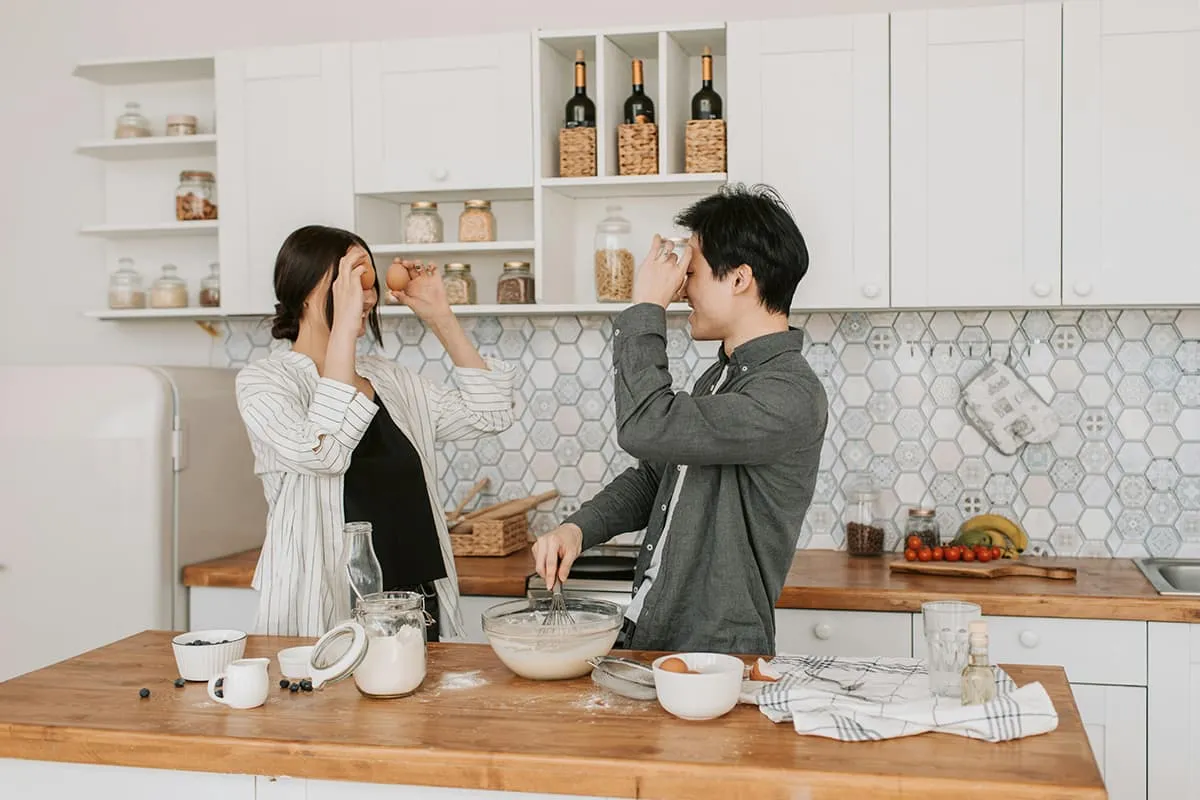

Cooking together is not merely about food. It is a ritual. A messy, fragrant, unpredictable ritual. When two people step into the kitchen, they enter a shared world—knives clatter, spices fly, and laughter often follows a near-disaster.
This is where connection starts. A survey by the American Institute of Stress found that 63% of couples who cook together regularly report noticeably lower stress levels in their relationship. Why? Because the kitchen becomes a sanctuary. No emails. No deadlines. Just the two of you, figuring out if the sauce needs more salt.
Communication Beyond Words
Ever tried to coordinate a complex recipe with someone? It forces you to communicate. And quickly. “Hand me the whisk.” “Is the oven preheated?” A glance. A nod. These tiny exchanges build a bridge. A study from the University of Denver observed that couples engaged in shared tasks—like cooking—showed a 27% improvement in non-verbal communication over six months. Words become secondary. You develop a rhythm. A shared language of spatulas, simmering pots, and silent agreements. It’s subtle, but it’s powerful.
Cooking can not only strengthen existing relationships but also help create new ones. How? Simply open a random roulette chat online and simply chat with people while cooking. Cooking and CallMeChat are a solid foundation for meeting new people and making friends, and maybe even family.
A Recipe for Emotional Connection
Emotions run high in the kitchen. Literally. There’s heat, sharp edges, and the ever-present risk of burning the garlic. But here’s the thing: when you navigate that chaos together, you build trust. You laugh when the flour bag explodes. You shrug when the cake collapses. A 2024 study in the Journal of Social and Personal Relationships revealed that couples who cook together at least three times a week report a 34% higher level of emotional intimacy. Vulnerability is shared. You’re not just cooking; you’re revealing patience, humor, and the willingness to mess up—together.
Memories Made, One Dish at a Time
Remember that pasta you made during the blackout? Or the curry that set off the fire alarm? Shared cooking experiences become legends. They turn into stories you retell at parties. “Remember when we thought cayenne was paprika?” Laughter erupts. These are anchors. Psychologists call them “shared narratives”—they strengthen the foundation of any relationship. According to a HelloFresh survey, 81% of people believe cooking together creates lasting memories. That is not just marketing fluff. It’s true, seasoned with experience.
Teamwork: The Secret Sauce
Teamwork in the kitchen is non-negotiable. One chops, one stirs. One reads the recipe aloud, the other critiques the chef’s knife skills. You learn to delegate. You learn to trust the other’s timing. It is a microcosm of life. When you successfully plate a meal together, you have accomplished something as a unit. A study from the University of Oxford indicated that cooperative activities—like cooking—increase endorphin release, which promotes bonding. In short, teamwork feels good. Your brain rewards you for it.
Stress Relief, Stirred Together
Life piles on stress. Bills, deadlines, endless notifications. But when you cook together, you enter a different zone. You focus on the sizzle. The aroma. The simple act of creating. It is mindfulness in motion. And when done with someone, the stress halves. A University of Minnesota study found that couples engaging in “low-stakes collaborative tasks” like cooking experienced a 41% reduction in cortisol levels compared to those who just watched TV. So, ditch the remote. Grab an apron. Stir something.
Quality Time, Not Chore Time
Let’s be honest: cooking can feel like a chore. A tedious obligation. But when it’s shared, it transforms. It becomes quality time—unstructured, playful, real. The key is presence. No phones. No distractions. Just two people navigating a recipe together. A 2023 report from the National Marriage Project at the University of Virginia highlighted that couples who prioritize shared activities like cooking report 28% higher relationship satisfaction than those who do not. Quality time is not about hours; it is about engagement. And a simmering pot demands engagement.
Understanding Through Culinary Collaboration
You learn a lot about a person when you cook with them. Do they measure meticulously? Do they taste as they go? Are they calm under pressure or prone to flour-tossing chaos? These observations build mutual understanding. You begin to anticipate needs. You learn preferences, quirks, and unspoken rules. This develops mutual understanding in a way conversation sometimes cannot. It is practical. It is tangible. Over time, this awareness spills into every other corner of your relationship. You become more attuned.
Satisfaction Served on a Plate
Here is a simple equation: shared effort + shared meal = increased relationship satisfaction. Almost mathematical. When you sit down to eat what you have made together, there is a sense of pride. A quiet “we did this.” That feeling is powerful. A 2019 study in Appetite journal found that couples who cook together at least twice a week are 52% more likely to report being “very happy” in their relationship. Satisfaction is not only about grand gestures. It lives in these everyday collaborations.
Small Interactions, Big Impact
Never underestimate the small moments. The playful flick of flour. The synchronized reach for the oven mitt. These promote positive interactions—tiny deposits in your emotional bank account. Over time, they accumulate. And when conflicts arise, as they always do, these deposits act as a buffer. They remind you that you are a team. Research from The Gottman Institute emphasizes that thriving relationships maintain a 5:1 ratio of positive to negative interactions. Cooking together? It is a factory for those positives. One shared meal at a time.
There aren't any comments left behind yet you can be the very first to comment!